

Key Takeaways
- Brain fog is not a medical diagnosis. It’s a cluster of cognitive symptoms that signal something else is going on in your body.
- Common causes include sleep deprivation, chronic stress, hormonal shifts, nutrient deficiencies, and conditions like long COVID, thyroid dysfunction, and depression.
- A targeted brain fog test workup, including blood panels for thyroid, B12, vitamin D, and inflammatory markers, can identify the root cause.
- Brain fog treatment starts with addressing the underlying issue, supported by lifestyle changes, targeted supplementation, and, in some cases, therapies like NAD+ IV therapy under a doctor’s supervision.
Brain fog, a condition familiar too many, can manifest as struggling to recall words during conversations, rereading text without comprehension, or entering a room with no memory of the reason. The clinical term for this cluster of symptoms is brain fog, and while it’s not a formal diagnosis, it’s a reliable signal that something in the body needs attention.
As a frequent cognitive complaint for working professionals, new parents, and those recovering from illness, brain fog is a symptom that requires further investigation. If you’ve been having similar experiences, here’s what to know about what brain fog is, the most common causes, how doctors test for it, and how treatment is handled.
What Is Brain Fog? A Clear Explanation
Brain fog is not an official medical diagnosis, but a non-medical umbrella term for a cluster of cognitive symptoms. This includes difficulty concentrating, forgetfulness, mental slowness, and trouble finding the right words. A 2022 review in Nature Reviews Neuroscience described it as difficulties with attention, memory, and language that produce a subjective lack of “mental clarity.”
The distinction here matters, as brain fog is a symptom, not a standalone condition. It points to something else going on, whether that’s poor sleep, a hormonal shift, a nutrient deficiency, or an underlying medical issue. It’s different from normal tiredness or the occasional unfocused afternoon, and warrants getting a checkup when it persists for weeks, disrupts daily functioning, and doesn’t resolve with rest.
Brain Fog Symptoms to Watch For
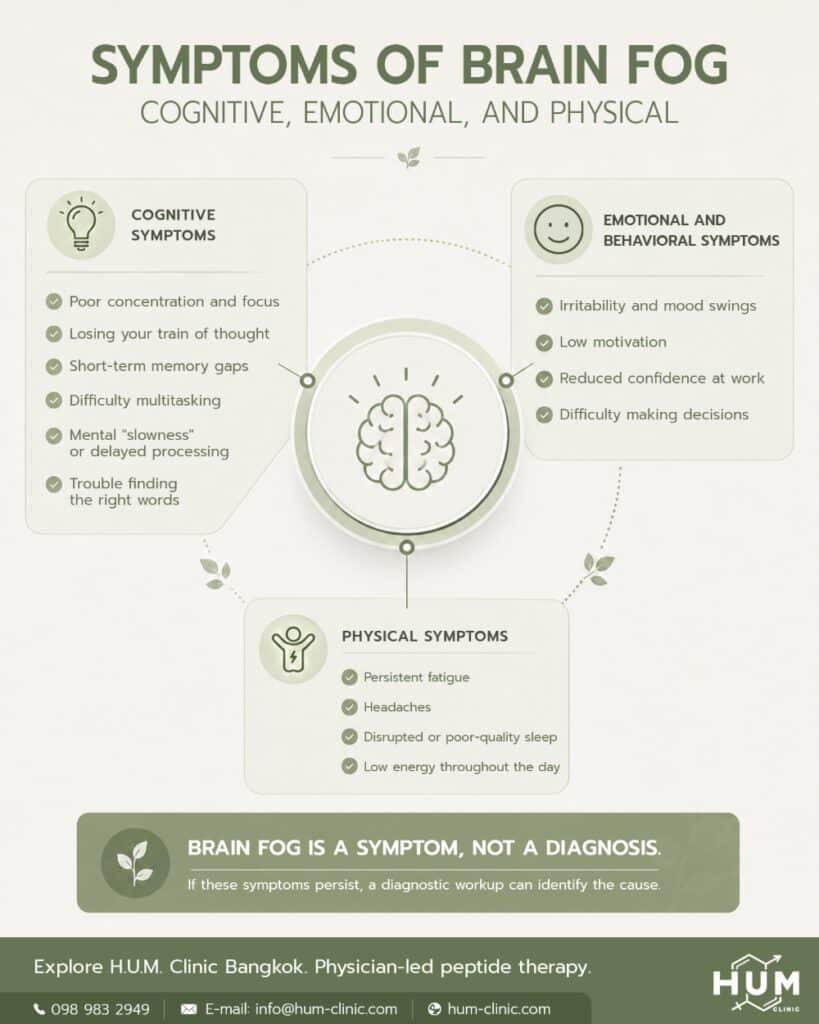
Cognitive symptoms are usually the most obvious for brain fog, which may manifest as poor concentration, losing your train of thought mid-conversation, short-term memory gaps, difficulty multitasking, and a persistent sense of mental “slowness.”
Cognitive symptoms are frequently accompanied by emotional and behavioral changes. It’s common to experience irritability, mood swings, low motivation, and decreased workplace confidence. From there, physical symptoms tend to travel with brain fog too, which can include fatigue, headaches, disrupted sleep, and low energy throughout the day.
Groups most commonly affected by brain fog include students under academic pressure, working professionals dealing with burnout, new parents, perimenopausal women, people with chronic illness, and long-COVID patients.
What Causes Brain Fog?
The causes fall into three broad categories.
- Lifestyle and environment: Sleep deprivation is the most common trigger. Chronic stress and burnout, a poor diet with blood sugar swings, dehydration, a sedentary lifestyle, and excessive screen time all contribute.
- Medical and hormonal: Anxiety, depression, ADHD, hormonal shifts during pregnancy or menopause, thyroid dysfunction, chronic illness, autoimmune conditions, and post-viral syndromes, including long COVID. A 2024 systematic review in the journal Life Sciences confirmed that approximately 10% to 35% of COVID survivors experience persistent cognitive symptoms.
- Medications and toxins: Certain antidepressants, sedatives, and antihistamines can impair cognitive function. Chemotherapy-related cognitive changes affect up to 75% of patients during or after treatment, according to the Cleveland Clinic. Environmental pollutants and heavy metal exposure are less common but documented causes.
How Is Brain Fog Diagnosed and Tested?
Brain fog can present itself differently in people, so there’s no single brain fog test. Diagnosis starts with a full medical history, a physical exam, medication review, and an evaluation of sleep and mood patterns.
Standard lab work typically includes a complete blood count, metabolic panel, thyroid function tests, B12, folate, vitamin D, fasting blood sugar, and inflammatory markers like CRP. These tests can identify nutrient deficiencies, hormonal imbalances, and metabolic issues that commonly drive brain fog.
In more complex cases, a doctor may order neuropsychological testing, an MRI, or an EEG to rule out neurological conditions. Red flags that require urgent attention include sudden confusion, severe headache, one-sided weakness, speech changes, or seizures.
Treatment Approaches for Brain Fog

Effective brain fog treatment starts with identifying and addressing the root cause. That means a thyroid issue needs thyroid management, depression needs therapeutic support, and a vitamin deficiency needs correction.
- Lifestyle interventions form the foundation: this includes consistent sleep of seven to nine hours, regular aerobic exercise, stress reduction through mindfulness or structured breaks, and a nutrient-dense diet that avoids sharp blood sugar swings.
- Therapeutic care: Cognitive behavioral therapy and talk therapy are effective for brain fog linked to anxiety or depression. Cognitive rehabilitation programs are showing benefits for long-COVID patients.
- Vitamins for brain fog: When driven by a documented deficiency, supplementation can make a measurable difference. Vitamin B12 supports nerve function and myelination, while Vitamin D plays a role in neuroprotection and mood regulation. Magnesium contributes to nerve signaling and stress response. Omega-3 fatty acids support brain cell membrane integrity and reduce neuroinflammation. A 2020 meta-analysis published in Nutrients found that B vitamin supplementation over three months improved global cognition and episodic memory in non-demented adults.
However, these are targeted corrections, not general wellness supplements. Testing should be conducted first to confirm the deficiency before starting supplementation.
When to See a Doctor About Brain Fog
While symptoms may vary from person to person, see a doctor if brain fog persists for more than a few weeks despite lifestyle changes. Seek medical attention sooner if it’s paired with unexplained weight change, hair loss, numbness, chest pain, or severe mood shifts, as that can signal something more serious.
When you visit, bring a symptom diary, a medication/supplement list, and notes on your sleep and eating habits. When the root cause is identified and treated, most people recover, though the healing process can be lengthy based on the issue’s severity and duration.
Get the Right Testing for Brain Fog at H.U.M. Clinic Bangkok
Brain fog is common and frustrating, but it is almost always traceable to an underlying cause that can be addressed. This situation requires medical intervention rather than pushing through or ignoring it, particularly if it continues and begins to interfere with your daily activities. The right diagnostic workup can identify the issue, and the right treatment plan can resolve it.
This is where H.U.M. Clinic comes in, offering physician-supervised diagnostic blood panels, specialist mental health support, and structured follow-up care with English-speaking doctors, all under ISO 9001:2015 quality standards. Every assessment of ours is designed to find the root cause, and our doctors offer comprehensive diagnostic blood panels, specialist support, and therapies, including NAD+ IV therapy, all in one visit near BTS Asok and MRT Sukhumvit.
Book a consultation at H.U.M. Clinic to identify what’s behind your brain fog and see whether NAD+ IV therapy may help.
- NAD+ IV Therapy Information: https://www.hum-clinic.com/service/iv-drip-treatment-bangkok/
- LINE: https://lin.ee/jsyyxh6
- WhatsApp: https://wa.me/66989832949
- Phone: 098 983 2949
- Email: [email protected]
References:
Defining Brain Fog: A Transdiagnostic Narrative Review. Retrieved June 12, 2026, from https://pmc.ncbi.nlm.nih.gov/articles/PMC12438890/
Multidisciplinary Approach to Brain Fog and Related Persisting Symptoms Post COVID-19. Retrieved June 12, 2026, from https://pmc.ncbi.nlm.nih.gov/articles/PMC8809226/
Intervention Modalities for Brain Fog Caused by Long-COVID: Systematic Review of the Literature. Retrieved June 12, 2026, from https://pmc.ncbi.nlm.nih.gov/articles/PMC11176231/
Brain Fog: What It Is, Causes, Symptoms and Treatment. Retrieved June 12, 2026, from https://my.clevelandclinic.org/health/symptoms/brain-fog
Lifting the Fog. Retrieved June 12, 2026, from https://pmc.ncbi.nlm.nih.gov/articles/PMC9187342/
Efficacy of Vitamins on Cognitive Function of Non-Demented People: A Systematic Review and Meta-Analysis. Retrieved June 12, 2026, from https://www.ncbi.nlm.nih.gov/pmc/articles/PMC7231132/
Role of Vitamin D in Cognitive Dysfunction: New Molecular Concepts and Discrepancies between Animal and Human Findings. Retrieved June 12, 2026, from https://www.ncbi.nlm.nih.gov/pmc/articles/PMC8620681/
Chemotherapy Brain Fog (Chemo Brain): Symptoms and Treatment. Retrieved June 12, 2026, from https://my.clevelandclinic.org/health/diseases/21032-chemo-brain
Frequently Asked Questions About Brain Fog
Q: What is brain fog?
A: Brain fog is a non-medical term for a group of cognitive symptoms including poor concentration, forgetfulness, mental slowness, and difficulty finding words. It’s not a diagnosis itself, but a signal that something else is affecting your brain function.
Q: What causes brain fog?
A: Common causes include sleep deprivation, chronic stress, hormonal changes during menopause or thyroid dysfunction, nutrient deficiencies in B12 or vitamin D, post-viral conditions like long COVID, and certain medications. A diagnostic workup can help identify the specific cause.
Q: What helps with brain fog?
A: Treatment depends on the underlying cause. Consistent sleep, regular exercise, stress management, and correcting nutrient deficiencies form the foundation. For documented deficiencies, vitamins like B12, vitamin D, magnesium, and omega-3s can improve cognitive function.
Q: When should I see a doctor for brain fog?
A: See a doctor if brain fog lasts more than a few weeks, worsens over time, or comes with symptoms like unexplained weight change, severe headache, numbness, or mood changes. Sudden confusion with weakness or speech changes requires emergency care.

Wichakorn Jitpraphun, M.D. (Dr. Kamin) is the Co-founder and Medical Director of H.U.M. Clinic, Bangkok. A physician licensed by the Medical Council of Thailand (License No. 51754), he has over 10 years of clinical experience, practicing since 2016. Dr. Kamin holds Certificate Diplomas in Sexual Medicine and Sexology from Thammasat University and Andrology certification from the Society of Men’s Health Singapore. His clinical practice focuses on testosterone replacement therapy (TRT), Men’s health, sexual medicine, HIV prevention and treatment, peptide therapy, and evidence-based medical weight management.