

Key Takeaways
- Obesity is recognized as a chronic, complex disease shaped by genetics, hormones, environment, and lifestyle. The causes of obesity extend far beyond diet, which is why lasting weight management often needs a structured medical approach rather than short-term dieting.
- For adults navigating weight-related medical conditions like type 2 diabetes, high blood pressure, or fatty liver disease, lifestyle tweaks are not always enough. Specialized medical support can help manage health risks and improve your progress.
Table of contents
Obesity is a chronic medical condition characterized by excessive body fat that can meaningfully raise the risk of serious health problems. The World Health Organization estimates that more than one billion people worldwide now live with obesity, and adult prevalence has more than doubled since 1990. It is shaped by a combination of genetics, hormones, environment, medications, sleep, stress, and daily habits.
For many adults, healthy eating and regular movement help but are not always enough to reach or maintain a healthier weight. In these cases, medical treatment under a doctor’s supervision, including prescription weight loss injections, may be a reasonable option to consider. This guide explains what obesity actually is, the main causes of obesity, common obesity symptoms, and the medical support available in Bangkok when lifestyle changes alone are not enough.
What Is Obesity?
Obesity is a chronic condition defined by excessive body fat that may harm health. It is not the same as simply being overweight. Being overweight refers to a body weight above what is considered healthy for a person’s height, while obesity describes a higher level of body fat associated with a clearly increased risk of medical complications.
The World Health Organization, the American Medical Association, and many professional societies recognize obesity as a chronic disease requiring long-term management.
The most common screening tool used in clinics is body mass index, or BMI, which compares weight to height. According to the CDC, adults with a BMI of 25.0 to 29.9 fall in the overweight range, while a BMI of 30 or higher is classified as obesity. BMI alone does not capture everything, so doctors also consider waist circumference, body composition, and overall health when assessing risk.
What Causes Obesity?
The causes of obesity are rarely just one thing. Most cases result from an interaction between biology, environment, and behavior. Understanding these layers helps explain why weight is often difficult to change through effort alone.
Lifestyle Factors
- High-calorie eating patterns: Diets heavy in ultra-processed foods, refined carbs, and sugary drinks push you into a caloric surplus.
- Physical inactivity: Desk jobs, long commutes, and low daily movement burn fewer calories overall.
- Poor sleep: Short or interrupted sleep is linked to a bigger appetite and weight gain.
- Chronic stress: Ongoing stress often triggers cravings for higher-calorie foods.
Medical and Biological Factors
- Genetics: Family history strongly influences how the body stores fat, regulates appetite, and responds to weight loss efforts.
- Hormonal imbalances: Underlying conditions like hypothyroidism or polycystic ovary syndrome (PCOS) can shift your metabolism and make losing weight more difficult. Hence, managing overweight symptoms often require looking at overall endocrine health.
- Certain medications: Some antidepressants, antipsychotics, corticosteroids, and diabetes medicines can promote weight gain as a side effect.
- Metabolic adaptation: After weight loss, the body often reduces energy use and increases hunger signals, making sustained loss physiologically harder.
Environmental Factors
- Food environment: Easy access to cheaper, calorie-dense, and ultra-processed food.
- Built environment: Neighborhoods without safe walking or exercise options make routine activity harder.
- Work patterns: Desk-based roles and irregular schedules limit movement and can disrupt healthy eating patterns.
Signs, Symptoms, and Health Risks of Obesity
Many signs of obesity develop gradually and can be easy to dismiss until they start affecting daily life. Recognizing these symptoms early can help you and your doctor act before they turn into more serious health conditions.
Common Signs and Symptoms
- Elevated BMI or excess body fat: A BMI of 30 or higher, or a high waist circumference.
- Reduced mobility: Difficulty with stairs, prolonged standing, or getting up from a seated position.
- Breathlessness with activity: Shortness of breath during walking, light exercise, or basic daily tasks.
- Persistent fatigue: Low energy that does not improve with rest, sometimes linked to poor sleep quality.
- Joint discomfort: Pain in the knees, hips, or lower back from added mechanical load.
Weight-Related Medical Conditions
Obesity is a risk factor associated with a wide range of other health conditions. Not everyone with obesity develops these conditions, but risk increases substantially with a higher BMI and larger waist circumference.
- Type 2 diabetes: Excess body fat, particularly around the abdomen, increases insulin resistance and the risk of high blood glucose.
- High blood pressure: Obesity is one of the most consistent risk factors for hypertension.
- Cardiovascular disease: Higher rates of coronary artery disease, stroke, and heart failure are seen in populations with obesity.
- Non-alcoholic fatty liver disease: Fat accumulation in the liver can progress to inflammation and long-term liver damage.
- Obstructive sleep apnea: Pauses in breathing during sleep are more common in adults with obesity and can worsen fatigue and blood pressure.
- Osteoarthritis: Extra load on weight-bearing joints increases cartilage wear and chronic pain.
- Certain cancers: Obesity is linked to an increased risk of several cancers, including colorectal, breast, endometrial, kidney, and liver.
Can Obesity Be Treated?
Obesity is treatable, but successful management usually requires more than short-term dieting.
Lifestyle Changes As the Foundation
- Nutrition: A structured eating pattern focused on whole foods, adequate protein, and controlled portions.
- Physical activity: A mix of aerobic movement and resistance training tailored to current ability and joint health.
- Behavioral support: Changes in certain habits, self-monitoring, and psychological support when mental health is a factor.
- Sleep and stress: Improving sleep quality and managing chronic stress supports appetite regulation and adherence.
Medical Treatment If Necessary
Doctors may consider medication or other medical options when specific criteria are met. Common indicators include:
- BMI thresholds: A BMI of 30 or higher, or a BMI of 27 or higher with at least one weight-related condition.
- Existing health conditions: Type 2 diabetes, high blood pressure, high cholesterol, or fatty liver disease already present.
- Limited response to lifestyle change: Sustained effort has not produced meaningful or lasting results.
What Are Weight Loss Injections?
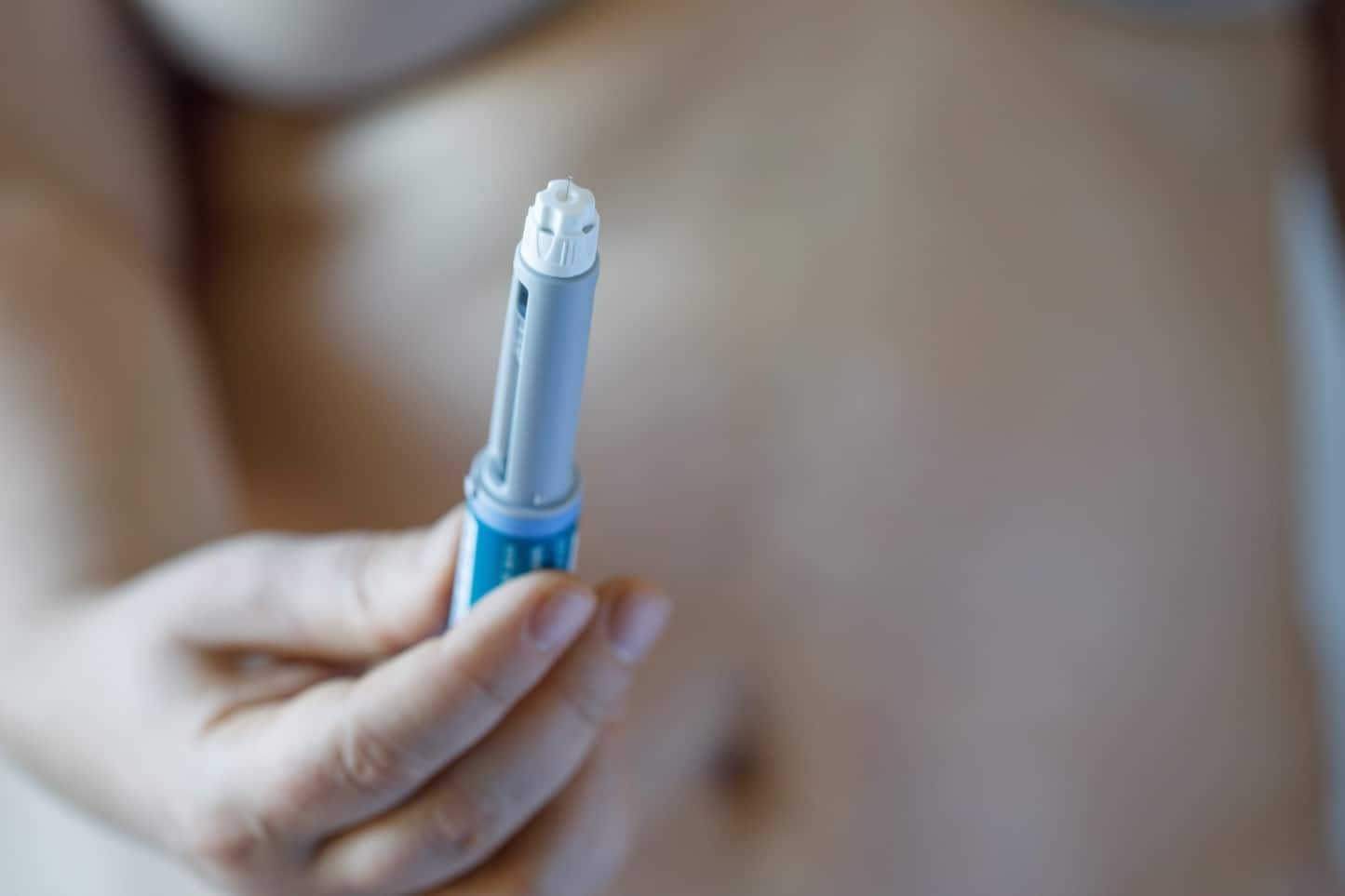
Weight loss injections are prescription medications that mimic hormones the body naturally produces to regulate appetite and fullness. Most belong to a family called GLP-1 receptor agonists, though newer options act on two or three appetite pathways at once. For more information on how they work, read our related blog, What Are Weight Loss Injections and Are They Right for You?
What Is the Best Injection for Weight Loss in Thailand?
There is no single “best” weight loss injection for everyone. The right choice depends entirely on your BMI, medical history, and specific health goals.
Currently, the most widely discussed prescription options available in Thailand are semaglutide, a GLP-1 receptor agonist, and tirzepatide, a dual GIP and GLP-1 receptor agonist.
A clinical evaluation is the safest way to find the medication that aligns with your unique physiology.
Popular GLP-1 Options at H.U.M. Clinic
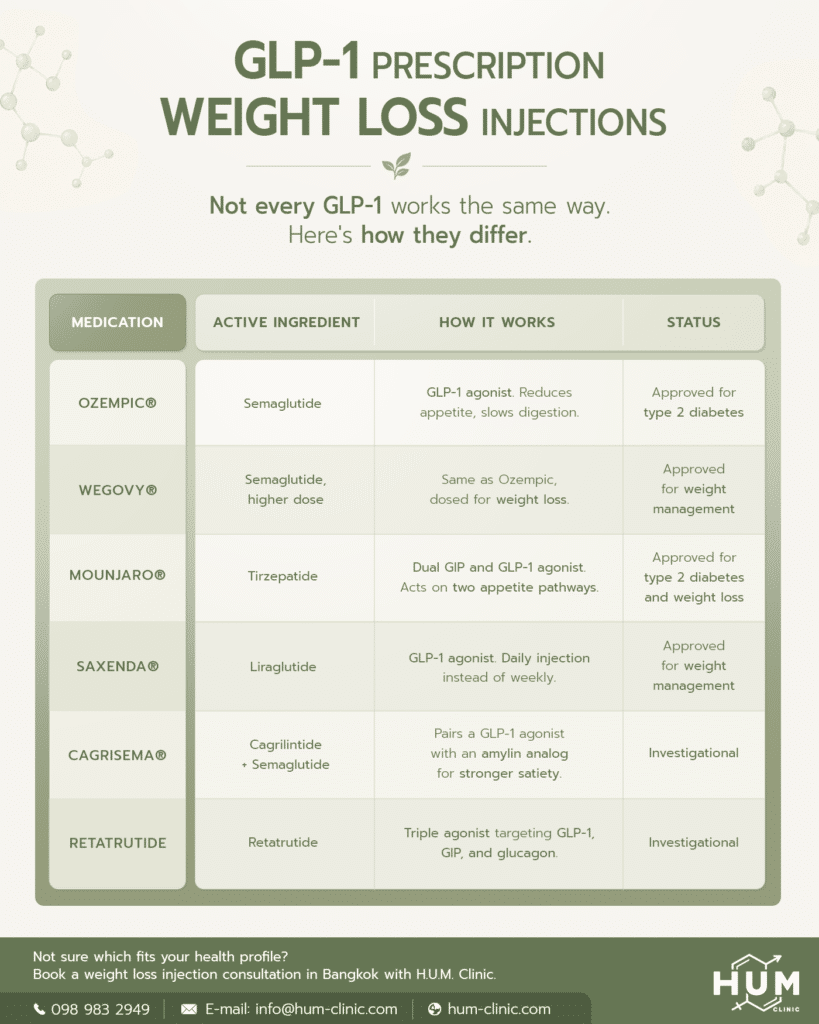
Not every GLP-1 works the same way. Below are the options currently available:
- Ozempic® (semaglutide): A weekly GLP-1 agonist FDA-approved for type 2 diabetes and used off-label for weight management under medical supervision.
- Wegovy® (higher-dose semaglutide): Same active ingredient as Ozempic, dosed specifically for weight management. FDA-approved for adults with a BMI of 30 or higher, or 27 or higher with a weight-related condition.
- Mounjaro® (tirzepatide): A dual GIP and GLP-1 agonist that acts on two appetite pathways at once. FDA-approved for type 2 diabetes and approved in the US as Zepbound for chronic weight management.
- Saxenda® (liraglutide): A daily GLP-1 injection FDA-approved for chronic weight management. Requires a daily dose rather than weekly.
- CagriSema® (cagrilintide and semaglutide): An investigational combination pairing a GLP-1 agonist with an amylin analog for added appetite and satiety effects.
- Retatrutide: An investigational triple agonist targeting GLP-1, GIP, and glucagon receptors. Still in late-stage clinical trials.
Schedule a consultation with our doctors for more information.
What to Expect During a Weight Loss Consultation
If you are considering a weight loss injection consult in Bangkok, here is what you can expect from your first appointment:
- Medical history and health assessment: Current conditions, medications, family history, and prior weight loss attempts.
- Weight, BMI, and body composition review: Objective measures that inform treatment decisions.
- Discussion of treatment options: Lifestyle change, medications, and combinations, with realistic expectations.
- Personalized management plan: A long-term plan with clear follow-up and monitoring.
Obesity is a chronic medical condition shaped not only by lifestyle but also by biology and environment. Meaningful progress usually requires combining several lifestyle changes with individualized medical support, which may include prescription weight loss injections in some cases.
Start achieving progress and book your private weight loss injection consult in Bangkok with an expert physician at H.U.M. Clinic. With over eight years of experience caring for international patients, our team has built deep expertise across men’s hormones, sexual health, and medically supervised weight management.
Every consultation is grounded in experience and delivered in a private, modern clinic a short walk from BTS Asok and MRT Sukhumvit. Message us on LINE or WhatsApp, call 098 983 2949, or email us at [email protected].
References
- Obesity and overweight. Retrieved November 14, 2026, from https://www.who.int/news-room/fact-sheets/detail/obesity-and-overweight
- Adult BMI Categories. Retrieved November 14, 2026, from https://www.cdc.gov/bmi/adult-calculator/bmi-categories.html
- Obesity: Symptoms and Causes. Retrieved November 14, 2026, from https://www.mayoclinic.org/diseases-conditions/obesity/symptoms-causes/syc-20375742
- Obesity and Cancer. Retrieved November 14, 2026, from https://www.cancer.gov/about-cancer/causes-prevention/risk/obesity/obesity-fact-sheet
Frequently Asked Questions About Obesity (FAQs)
What is obesity?
Obesity is a chronic medical condition defined by excessive body fat that may harm health. It is commonly screened using body mass index, with a BMI of 30 or higher classified as obesity in adults. Doctors also consider waist circumference and overall health when assessing risk.
Is obesity a disease?
Yes. The World Health Organization, the American Medical Association, and many professional bodies recognize obesity as a chronic disease requiring long-term management. This framing supports appropriate screening, monitoring, and access to evidence-based treatment.
What causes obesity?
The causes of obesity usually involve a mix of genetics, hormones, medications, sleep, stress, environment, diet, and physical activity.
What weight-related medical conditions are linked to obesity?
Obesity is associated with type 2 diabetes, high blood pressure, cardiovascular disease, non-alcoholic fatty liver disease, obstructive sleep apnea, osteoarthritis, and an increased risk of several cancers. Risk generally rises with higher BMI and larger waist circumference.
What is the best injection for weight loss in Thailand?
There is no single best weight loss injection for everyone. Prescription options used in Thailand include semaglutide (Ozempic® and Wegovy®), tirzepatide (Mounjaro®), and liraglutide (Saxenda®), with newer options such as CagriSema® and retatrutide still under clinical investigation. The right choice depends on your BMI, medical history, and doctor’s assessment.
Who is eligible for prescription weight loss injections?
Prescription weight loss injections are generally considered for adults with a BMI of 30 or higher, or 27 or higher with at least one weight-related condition such as type 2 diabetes or high blood pressure. Eligibility is confirmed by a doctor after a full medical review.

Wichakorn Jitpraphun, M.D. (Dr. Kamin) is the Co-founder and Medical Director of H.U.M. Clinic, Bangkok. A physician licensed by the Medical Council of Thailand (License No. 51754), he has over 10 years of clinical experience, practicing since 2016. Dr. Kamin holds Certificate Diplomas in Sexual Medicine and Sexology from Thammasat University and Andrology certification from the Society of Men’s Health Singapore. His clinical practice focuses on testosterone replacement therapy (TRT), Men’s health, sexual medicine, HIV prevention and treatment, peptide therapy, and evidence-based medical weight management.