
Table of contents
Go Beyond the Basic Cholesterol Test with H.U.M. Clinic’s Advanced Cardiovascular Screening
At H.U.M. Clinic Bangkok, we offer a new standard in preventive and anti-aging medicine — the Advanced Cardiac Risk Panel, a precision blood test that looks far deeper than a routine cholesterol profile.
This test helps identify hidden cardiovascular risk factors long before symptoms appear, providing a foundation for effective prevention, hormone optimization, and long-term health planning.

Understanding Cardiovascular Disease (CVD)
Cardiovascular disease remains the leading cause of death worldwide, affecting men and women at increasingly younger ages.
The root cause of most CVD events is atherosclerosis — a chronic, inflammatory process in which cholesterol-rich particles, calcium, and immune cells accumulate within arterial walls.
How atherosclerosis harms you
- Narrowing: plaque reduces blood flow and oxygen delivery.
- Rupture: unstable plaque can tear, triggering a clot that blocks the artery — causing heart attack or stroke.
Who Is at Risk?
Traditional risks include smoking, high blood pressure, diabetes, obesity, and inactivity.
But modern diagnostics reveal many people with “normal cholesterol” still develop arterial plaque because of particle-related and genetic risks:
- Elevated Apolipoprotein B (ApoB) – reflects total number of atherogenic particles
- High Lipoprotein(a) [Lp(a)] – inherited, sticky, artery-clogging particle
- Excess Small Dense LDL (sdLDL) – tiny LDL particles that penetrate and damage artery walls
- Elevated hs-CRP or Homocysteine – signals of inflammation or endothelial injury
Why You Need More Than a Standard Cholesterol Test
Traditional lipid panels measure cholesterol concentration, not the number or quality of particles that carry it.
Two people can have the same LDL-C value, yet one may have thousands more small, dense, dangerous particles (sdLDL) or high ApoB and therefore a far greater risk of heart attack.
Our Advanced Cardiac Risk Panel uncovers these silent drivers of plaque formation.
The H.U.M. Clinic Comprehensive Cardiac Panel — 7 Key Markers
| Marker | What It Shows | Optimal Reference Range |
| Apolipoprotein B (ApoB) | The total number of harmful cholesterol-carrying particles (LDL, VLDL, Lp(a)). The single most accurate predictor of heart disease risk. | < 90 mg/dL for general prevention; < 80 mg/dL for high-risk patients (ESC/EAS guideline). |
| Lipoprotein (a) [Lp(a)] | A genetic, sticky lipoprotein that promotes clotting and inflammation; diet and exercise have little effect. | < 50 mg/dL (or < 125 nmol/L). |
| Small Dense LDL (sdLDL) | The most atherogenic LDL subtype — easily oxidized and penetrates artery walls. | < 20 mg/dL (low-risk range). |
| hs-C-Reactive Protein (hs-CRP) | Marker of chronic vascular inflammation; high levels indicate unstable plaque. | < 1.0 mg/L (low risk). |
| Homocysteine | Amino acid that injures the endothelium; elevated by B-vitamin deficiency. | < 10 µmol/L. |
| Standard Lipid Profile | LDL-C, HDL-C, Triglycerides. Provides baseline for comparison. | LDL < 100 mg/dL; HDL > 40 mg/dL (men); TG < 150 mg/dL. |
| Oxidized LDL (OxLDL) | Indicates LDL damage by free radicals — the form that truly drives inflammation and plaque growth. | < 60 U/L. |
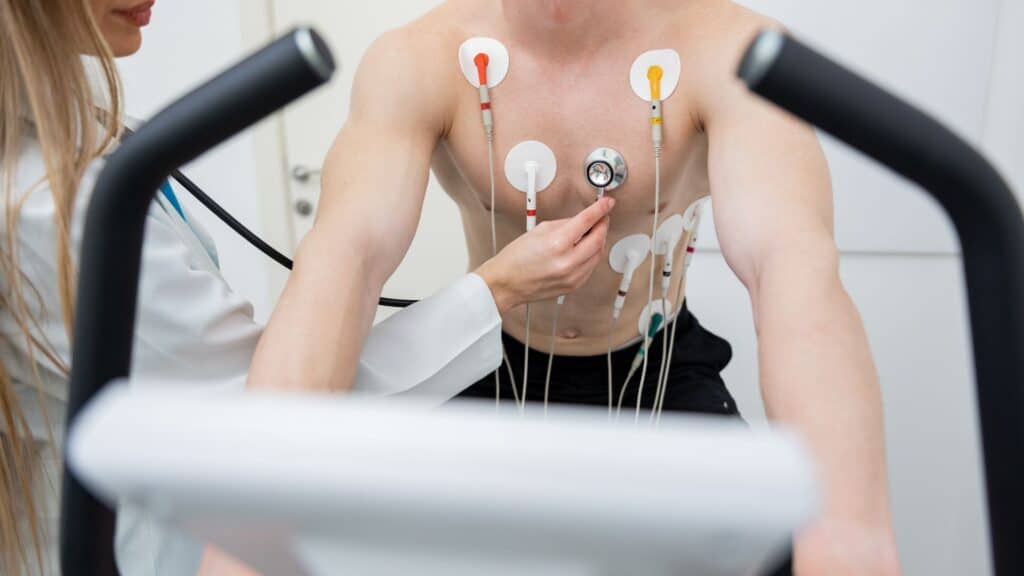
Cardiac health Testing in Bangkok — What to Expect
At H.U.M. Clinic, testing is simple and precise:
- Consultation: Review of personal and family cardiac risk.
- Blood Draw: A fasting blood test panel measuring 7 advanced cardiac markers.
- Analysis & Consultation: Results interpreted by our physician with a full cardiovascular-risk explanation and personalized action plan.
Integrating Results into Your Health Optimization Plan
Identifying a high-risk marker is only the first step. Our doctors use your profile to create a personalized prevention strategy combining lifestyle, supplementation, and medical therapy.
1. Lifestyle & Natural Optimization
| Area | Intervention |
| Dyslipidemia | Mediterranean-style, anti-inflammatory diet; regular exercise |
| Inflammation | Omega-3 (2–4 g/day), Curcumin (500–1000 mg/day), quality sleep & stress control |
| High Homocysteine | Vitamin B6, B9 (Folate 800–1000 µg), B12 (500–1000 µg) |
| Insulin Resistance | Medically supervised weight-loss programs with GLP-1 agonists (Wegovy®, Mounjaro®) |
| High ApoB / LDL-C | Red Yeast Rice (1200–2400 mg/day), Berberine (500 mg TID) |
| Arterial Calcification | Vitamin K2 (MK-7 180 µg/day) |
2. Medical & Pharmacological Management
When necessary, our physicians may prescribe:
- Statins or Ezetimibe – reduce ApoB and stabilize plaque
- PCSK9 inhibitors – for genetically high LDL-C or Lp(a)
- Anti-inflammatory or antioxidant protocols – lower hs-CRP and OxLDL
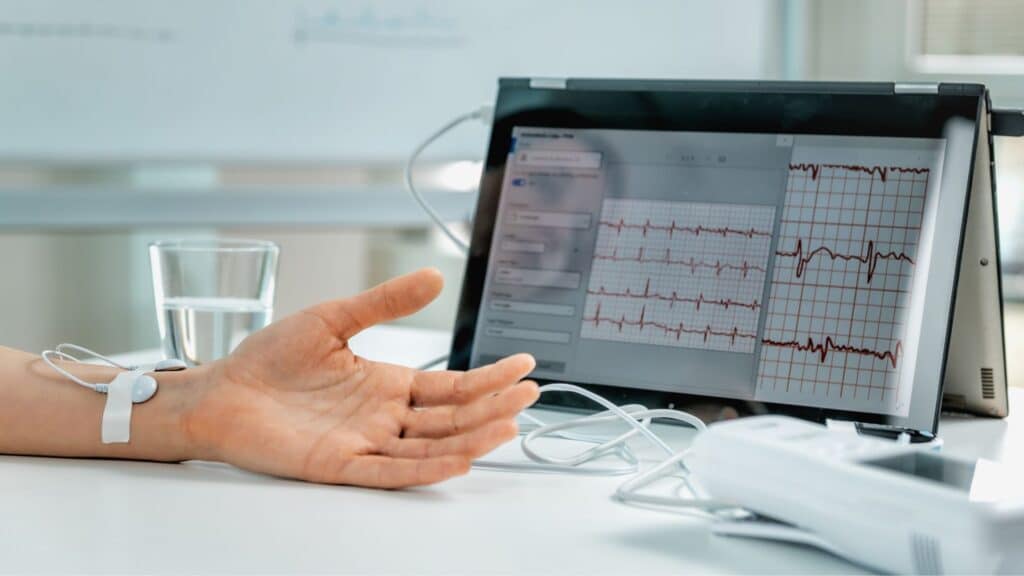
Cardiovascular Monitoring for Hormone & Anti-Aging Clients
Men on Testosterone Therapy (TRT) or Hormone Replacement Therapy (HRT) should have lipid particle testing regularly.
Even with normal LDL-C, supraphysiologic testosterone can:
- Lower HDL-C
- Increase ApoB and sdLDL
- Alter liver lipid metabolism
Our Advanced Cardiac Risk Panel is therefore a core safety component of all hormone and anti-aging programs at H.U.M. Clinic.
Personalized Prevention and Heart-Health Support
After interpreting your panel, our doctors may recommend:
- Targeted supplementation (CoQ10, Omega-3, Niacinamide, Vitamin K2)
- IV nutrient therapy to reduce oxidative stress and support vascular repair
- Peptide or metabolic programs to improve insulin sensitivity and endothelial function
Your plan is tailored to your biomarkers — not a one-size-fits-all approach.
Frequently Asked Questions
Who should get the Advanced Cardiac Panel?
Anyone over 40 or with family history of early heart disease, metabolic syndrome, or on hormone therapy should consider this test.
Can I do this test even if my cholesterol is normal?
Yes. Many people with “normal” LDL-C have high ApoB, Lp(a), or sdLDL that traditional tests miss.
How often should I repeat the test?
For general wellness: every 1–2 years.
For patients on TRT / HRT or with elevated risk: every 6–12 months.
Where can I get the test in Bangkok?
Exclusively at H.U.M. Clinic Bangkok, Sukhumvit 31.
We provide advanced lipid, ApoB, Lp(a), and sdLDL testing integrated with physician consultation.
What happens if my result is abnormal?
Our physician will interpret your findings, identify the root cause, and create a plan combining nutrition, supplements, and medication if needed.

Wichakorn Jitpraphun, M.D. (Dr. Kamin) is the Co-founder and Medical Director of H.U.M. Clinic, Bangkok. A physician licensed by the Medical Council of Thailand (License No. 51754), he has over 10 years of clinical experience, practicing since 2016. Dr. Kamin holds Certificate Diplomas in Sexual Medicine and Sexology from Thammasat University and Andrology certification from the Society of Men’s Health Singapore. His clinical practice focuses on testosterone replacement therapy (TRT), Men’s health, sexual medicine, HIV prevention and treatment, peptide therapy, and evidence-based medical weight management.