

Key Takeaways
- HMG (human menopausal gonadotropin, or menotropin) provides both FSH and LH activity. In men, it may support sperm production when the testes can still respond.
- HMG is not always better than HCG. HCG acts mainly like LH, while HMG also provides FSH activity, which matters when sperm production is the main goal.
- HMG may be considered for selected men with low sperm count or azoospermia after long-term TRT or anabolic steroid use, or poor sperm recovery despite HCG.
- Testosterone level and sperm count do not always move together, so doctor evaluation, hormone blood testing, and semen analysis are needed before starting HMG.
- Response varies and is usually assessed over months with repeat semen analysis. HMG does not guarantee sperm recovery.
Table of Contents
Many men searching for HMG (menotropin) in Bangkok or looking to buy HMG in Thailand are trying to improve sperm production after long-term TRT, anabolic steroid use, or poor response to HCG alone. HMG may be useful in selected patients, but it should not be started without medical evaluation, semen analysis, and hormone blood testing.
HMG, or human menopausal gonadotropin, contains follicle-stimulating hormone (FSH) activity and luteinizing hormone (LH) activity. In men, this combination may help support testicular function and spermatogenesis when the testes can still respond to gonadotropin stimulation.
At H.U.M. Clinic, HMG injection is available for selected patients after physician consultation. Men with previous TRT use, low sperm count, azoospermia, testicular shrinkage, fertility planning, or incomplete response to HCG can begin with a doctor-supervised TRT and fertility evaluation in Bangkok.
This article focuses on HMG for male hormone and fertility-related care, not ovarian stimulation or IVF treatment for women.
What Is HMG Menotropin?
HMG stands for human menopausal gonadotropin, also called menotropin or menotropins. It is a gonadotropin medication that contains both FSH activity and LH activity. Product information for menotropins describes it as a preparation containing follicle-stimulating hormone and luteinizing hormone activity.
In men, LH mainly stimulates Leydig cells in the testes to produce testosterone. FSH mainly supports Sertoli cell function and sperm production. This is why HMG may be discussed when the goal is not only increasing testosterone, but also supporting spermatogenesis.
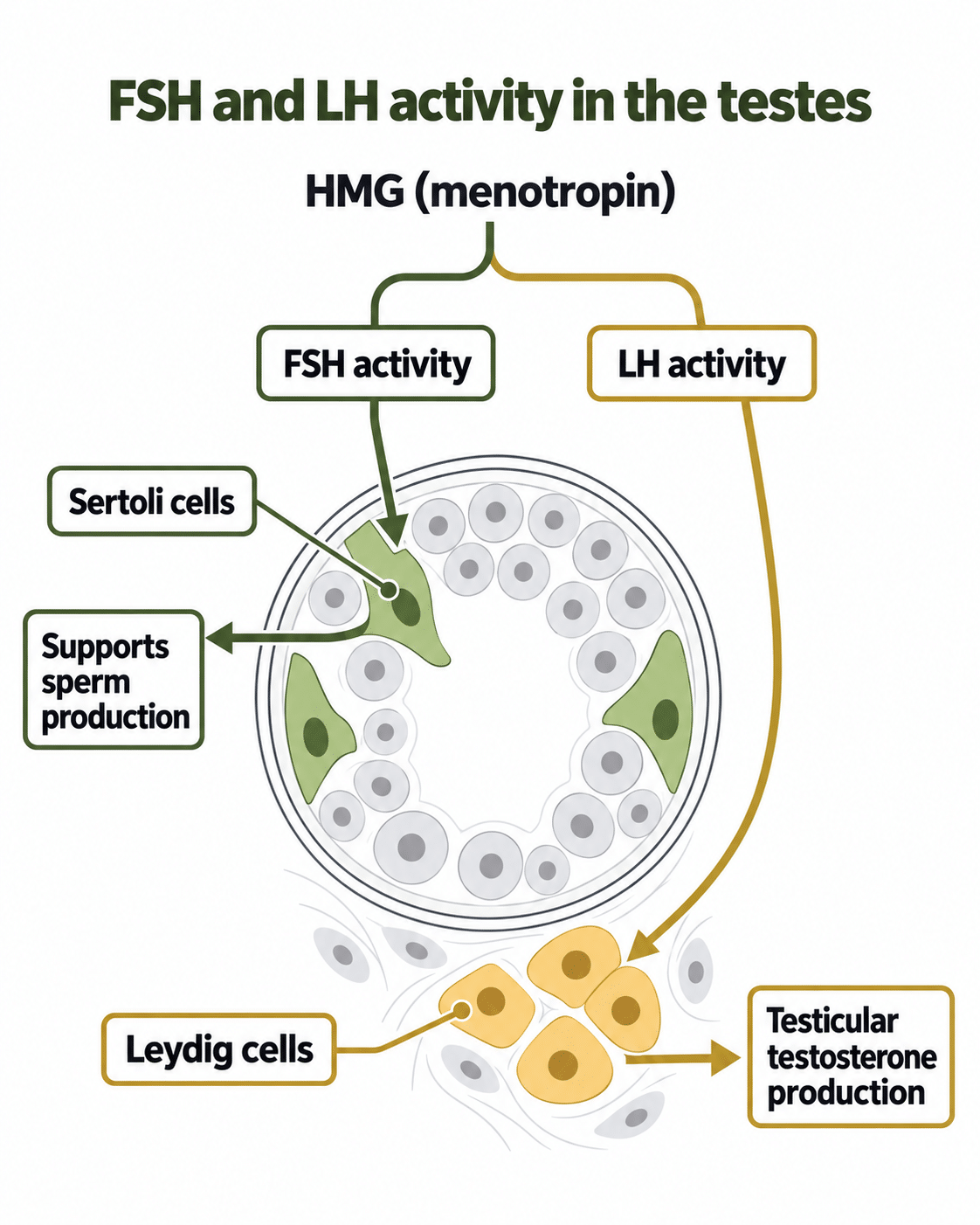
HMG is different from direct testosterone replacement therapy. TRT provides testosterone from outside the body and can suppress LH and FSH signaling. HMG aims to provide gonadotropin stimulation to the testes, which may be useful in selected fertility-focused cases.
HMG vs HCG: What Is the Difference?
HCG and HMG are often discussed together, but they are not the same.
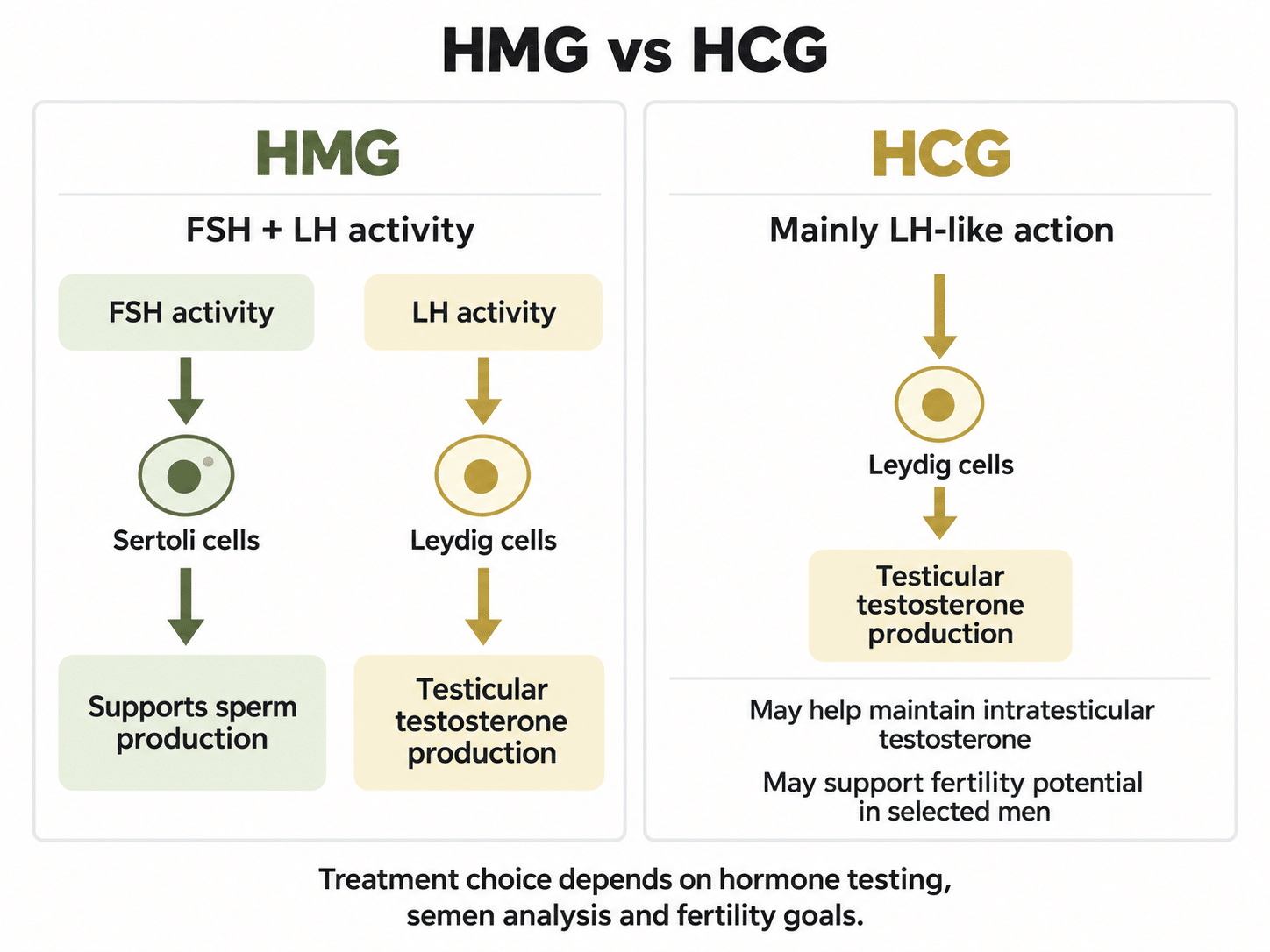
HCG acts mainly like LH. It can stimulate Leydig cells to produce testosterone and may help maintain intratesticular testosterone. This is why HCG is commonly used for selected men on TRT who want to support testicular size or fertility potential.
HMG provides FSH activity together with LH activity. The FSH component is especially important when sperm production is the main goal. Some men may have testosterone improvement with HCG but still have poor sperm recovery because sperm production also depends on FSH signaling.
For men comparing HCG, HMG, and TRT, the decision should be based on hormone levels, semen analysis, fertility timeline, previous testosterone or anabolic steroid exposure, testicular size, estradiol response, and safety markers. Patients can review TRT treatment options in Bangkok before choosing a treatment plan.
Who May Consider HMG?
HMG may be considered for selected men with fertility concerns, especially when sperm production is reduced after long-term TRT, testosterone injections, or anabolic steroid use.
Possible situations include:
- Low sperm count or azoospermia after TRT
- Long-term testosterone use with fertility planning
- Testicular shrinkage during testosterone therapy
- Poor sperm recovery despite HCG use
- Secondary hypogonadism with low or suppressed LH and FSH
- Fertility planning with abnormal semen analysis
- Previous anabolic steroid use with hormone suppression
HMG is not automatically appropriate for every man with low sperm count. Some patients may need HCG, enclomiphene, rFSH, lifestyle treatment, time off suppressive hormones, fertility specialist review, or assisted reproductive technology depending on the case.
For men who are unsure whether TRT has affected sperm production, H.U.M. Clinic recommends reviewing fertility history, hormone results, and semen analysis. Our related article on TRT and fertility explains why testosterone therapy can reduce LH, FSH, and sperm production in some men.
HMG After Long-Term TRT or Steroid Use
Long-term TRT or anabolic steroid use can suppress the brain-pituitary-testicular axis. When LH and FSH are suppressed, testosterone production inside the testes and sperm production may decrease. Some men may develop very low sperm count or azoospermia.
HCG can help provide LH-like stimulation, but if sperm production does not improve adequately, FSH activity may be needed. Clinical research on recovery after testosterone therapy has studied gonadotropin regimens using hCG and FSH for men with impaired spermatogenesis after testosterone use. One recent study reported improvement in sperm concentration in many men treated with hCG and FSH therapy after testosterone use.
This study did not test HMG directly, and it does not mean HMG guarantees sperm recovery. Response depends on age, duration of testosterone or steroid use, baseline fertility, testicular volume, LH, FSH, testosterone, estradiol, semen parameters, and whether the testes can still respond to stimulation.
HMG Price at H.U.M. Clinic
H.U.M. Clinic provides HMG injection for selected patients after physician consultation and blood testing.
Current HMG product options:
- Highly purified HMG 75 IU: 1,490 THB per vial
- HMG 75 IU: 1,250 THB per vial
- HMG 150 IU: 1,900 THB per vial
Prices do not include doctor consultation, blood testing, semen analysis, injection service, follow-up visits, or other medical service fees.
The total treatment cost depends on the treatment goal, number of vials required, duration of treatment, semen analysis schedule, blood test monitoring, and whether HCG, clomiphene, rFSH, or TRT adjustment is also needed.
Patients should not choose HMG based on price alone. The key question is whether HMG matches the patient’s hormone pattern, fertility goal, semen analysis, and safety profile.
Blood Tests and Semen Analysis Before HMG
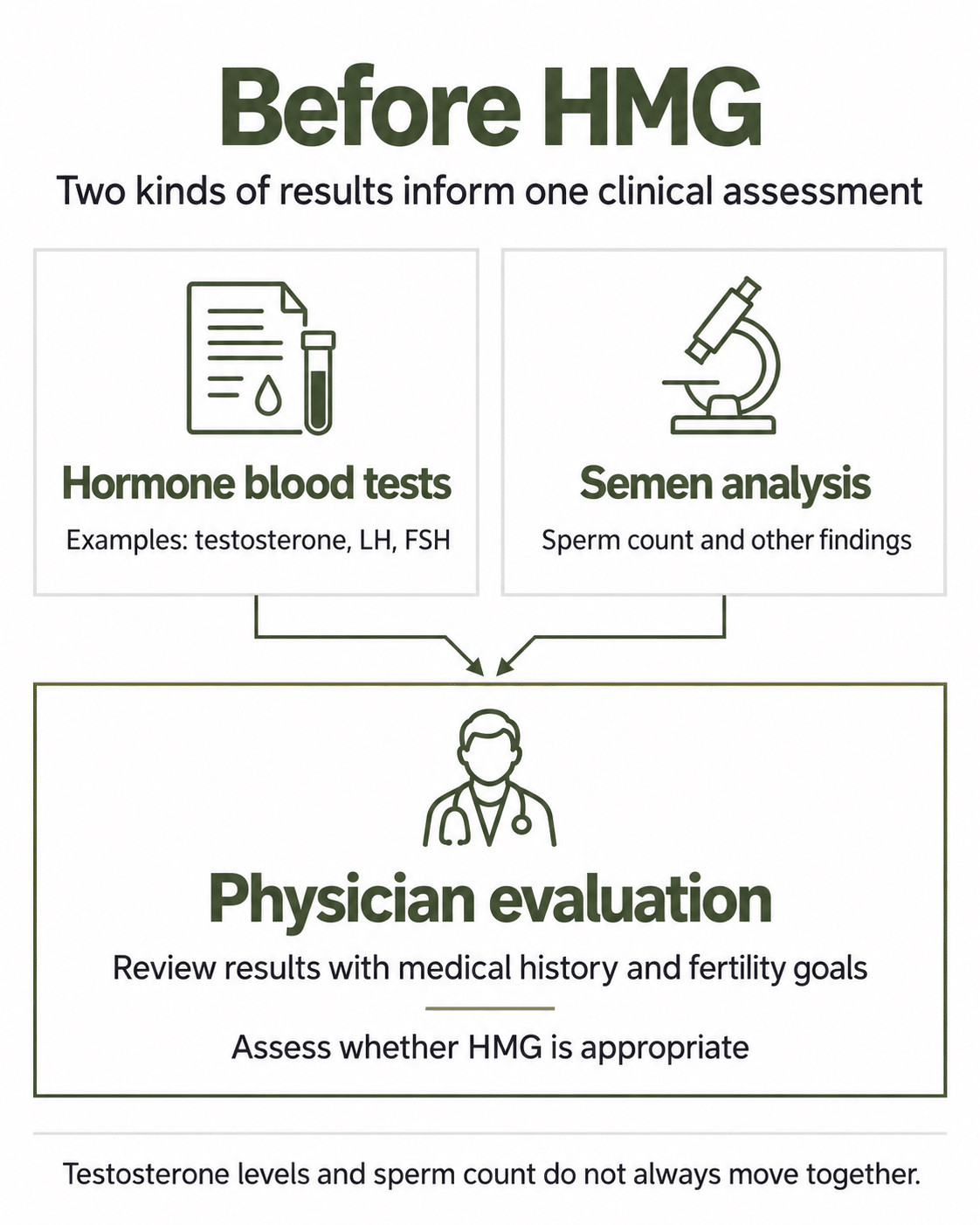
Before starting HMG, medical evaluation is needed to understand whether sperm production is likely to respond to gonadotropin therapy.
Baseline testing may include total testosterone, free or calculated free testosterone, SHBG, LH, FSH, estradiol, prolactin when indicated, complete blood count, liver and kidney function, lipid profile, fasting glucose or HbA1c, and semen analysis.
Men with fertility goals should not rely only on testosterone blood tests. Semen analysis is important because testosterone level and sperm count do not always move together.
The AUA/ASRM male infertility guideline discusses evaluation and treatment considerations for infertile men, including the role of hormonal testing and fertility-focused management. Patients can review the AUA/ASRM male infertility guideline for broader clinical context.
H.U.M. Clinic also provides hormone and testosterone blood testing for men who need baseline evaluation before HMG, HCG, enclomiphene, or TRT-related treatment.
HMG Injection and Monitoring
HMG is usually given by subcutaneous or intramuscular injection depending on the product and physician recommendation. The dose and schedule should be individualized based on semen analysis, testosterone level, LH, FSH, estradiol, fertility timeline, and treatment response.
Patients should not self-adjust HMG dose or combine HMG with HCG, TRT, clomiphene, rFSH, aromatase inhibitors, or anabolic steroids without medical supervision.
Monitoring may include symptoms, testicular size, total and free testosterone, estradiol, LH and FSH interpretation, semen analysis, acne or oily skin, mood changes, water retention, hematocrit, and fertility progress.
Because sperm production takes time, response should usually be assessed over months, not days or weeks. Some patients may need repeat semen analysis and treatment adjustment before a clear response is seen.
HMG at H.U.M. Clinic in Bangkok
H.U.M. Clinic provides HMG only as part of doctor-supervised hormone and fertility care. Our approach includes consultation with Thai-licensed, English-speaking physicians, review of previous TRT or anabolic steroid use, baseline hormone testing, semen analysis when fertility is a goal, discussion of HCG versus HMG versus rFSH, and follow-up monitoring.
HMG may be appropriate for selected men with suppressed fertility after TRT or poor response to HCG alone, but it is not a shortcut for unsafe steroid use or unsupervised hormone manipulation. The goal is to choose the safest fertility-focused strategy based on the patient’s actual hormone pattern and semen results.
Patients who want to discuss HMG can book a consultation with our doctor for hormone review, fertility planning, and blood test guidance.
FAQ About HMG in Bangkok
Can I buy HMG in Thailand?
HMG may be available through medical clinics or hospitals when clinically appropriate. At H.U.M. Clinic, HMG is provided only after physician consultation and blood testing.
How much is HMG at H.U.M. Clinic?
H.U.M. Clinic offers highly purified HMG 75 IU at 1,490 THB per vial, HMG 150 IU at 1,900 THB per vial, and HMG 75 IU at 1,250 THB per vial. Medical service fees and testing are not included.
Is HMG better than HCG?
Not always. HCG mainly acts like LH, while HMG provides FSH and LH activity. HMG may be more relevant when sperm production is the main goal or when HCG alone is not enough.
Can HMG help sperm return after TRT?
HMG may help selected men by providing FSH activity needed for spermatogenesis, but results are not guaranteed. Semen analysis and hormone testing are needed before and during treatment.
Medical Disclaimer
This article is for general medical information only and does not replace consultation with a licensed physician. HMG suitability, dose, injection schedule, treatment duration, monitoring, and fertility planning should be determined after medical evaluation, blood testing, and semen analysis.

Provides diverse medical services, specializing in male hormone treatment, sexual health, and general practice care. He is dedicated to delivering comprehensive care for international patients, addressing physical, emotional, and mental health needs.