
Key Takeaways
- Retatrutide is an investigational triple receptor agonist peptide that targets GLP-1, GIP, and glucagon pathways, setting it apart from single-target (semaglutide) and dual-target (tirzepatide) therapies.
- Phase 2 trial data published in The New England Journal of Medicine (2023) reported up to approximately 24% total body weight reduction over 48 weeks in a dose-dependent manner.
- The addition of glucagon activation increases energy expenditure and fat burning, supporting fat loss while helping preserve lean muscle mass.
- Retatrutide is currently investigational and is not widely approved for routine clinical use; large-scale phase 3 trials under the TRIUMPH program are ongoing.
- Medical-grade retatrutide at H.U.M. Clinic is manufactured under GMP, HACCP, and ISO 9001:2015 standards, with third-party lab verification for purity, sterility, endotoxin, and heavy metal testing.
- Treatment at H.U.M. Clinic follows a physician-supervised protocol with individualized dosing and body composition analysis to monitor fat loss, muscle preservation, and metabolic progress.
Table of contents
Retatrutide is a next-generation metabolic peptide that has gained significant global attention due to its promising clinical results in weight management and metabolic regulation. Early studies have reported substantial reductions in body weight, contributing to increasing interest in this emerging therapy.
In Thailand, a growing number of individuals are now seeking reliable and trustworthy sources of retatrutide, particularly as awareness of its clinical potential continues to expand and concerns around product quality remain important.
Learn about H.U.M. Clinic in Bangkok and our physician-supervised approach to retatrutide. We offer a medical-grade framework, with emphasis on quality, safety, and individualized assessment. Compounds are supported by third-party laboratory testing and Certificate of Analysis (COA) verification, helping ensure transparency and consistency in product standards.
This article is intended for educational purposes, providing an overview of retatrutide, its mechanisms, current clinical evidence, and key considerations before use. The focus is on supporting informed decision-making rather than promoting unsupervised or unverified use.
What Is Retatrutide?
Retatrutide is a triple-receptor agonist peptide that targets:
- GLP-1 (appetite regulation)
- GIP (metabolic signaling)
- Glucagon receptor (energy expenditure)
This combination makes it a next-generation metabolic therapy currently being studied for weight loss and metabolic optimization.
Latest Clinical Research on Retatrutide
In a phase 2 clinical trial published in The New England Journal of Medicine (2023), retatrutide demonstrated substantial weight loss over 48 weeks.
- Up to approximately 24% total body weight reduction (dose-dependent)
- Significant improvements in metabolic parameters
- A clear dose–response relationship
These findings have positioned retatrutide as one of the most promising investigational therapies in metabolic medicine.
Retatrutide is now being further evaluated in large-scale phase 3 clinical trials under the TRIUMPH program, which includes multiple studies assessing its effects in obesity, overweight with comorbidities, and type 2 diabetes.
At present, full phase 3 results have not yet been published, and these trials are ongoing. However, the continuation into phase 3 reflects strong preliminary evidence from earlier studies and growing clinical interest in its metabolic effects.
Mechanism of Action — The Triple “G” Pathway
Retatrutide is a triple “G” agonist, acting on three key pathways:
- GLP-1 — reduces appetite
- GIP — supports metabolic signaling
- Glucagon receptor — increases energy expenditure
Triple ‘G’ Pathway
Retatrutide activates all three simultaneously

GLP-1 Receptor
↓
Appetite Regulation
GIP Receptor
↓
Metabolic Signaling
Glucagon Receptor
↓
Energy Expenditure
The Role of Glucagon
What makes retatrutide different from earlier therapies is glucagon activation.
Glucagon helps:
- Increase energy expenditure
- Enhance fat burning
- Stimulate energy use in the liver
This allows the body to burn stored energy more efficiently, rather than relying only on reduced food intake.
Retatrutide vs Semaglutide vs Tirzepatide
| Treatment | Mechanism |
|---|---|
| Semaglutide | GLP-1 |
| Tirzepatide | GLP-1 + GIP |
| Retatrutide | GLP-1 + GIP + Glucagon |
Retatrutide’s triple mechanism contributes to its strong metabolic effects observed in research.
Implications for Body Composition
By combining appetite control and increased energy expenditure, retatrutide may support:
- Fat loss
- Improved metabolic efficiency
- Better preservation of muscle mass
Is Retatrutide Approved?
Retatrutide is currently considered an investigational compound and is not yet widely approved for routine clinical use. For this reason, access to retatrutide in Bangkok should only occur under physician supervision with proper medical screening.
Medical-Grade Retatrutide vs Research Peptides
Research Peptides (Common Online Market)
- Unknown purity (some show only HPLC)
- No sterility verification
- No endotoxin testing
- Unregulated sources
Medical-Grade Retatrutide at H.U.M. Clinic, Bangkok
- GHP / GMP / HACCP / ISO 9001:2015 manufacturing
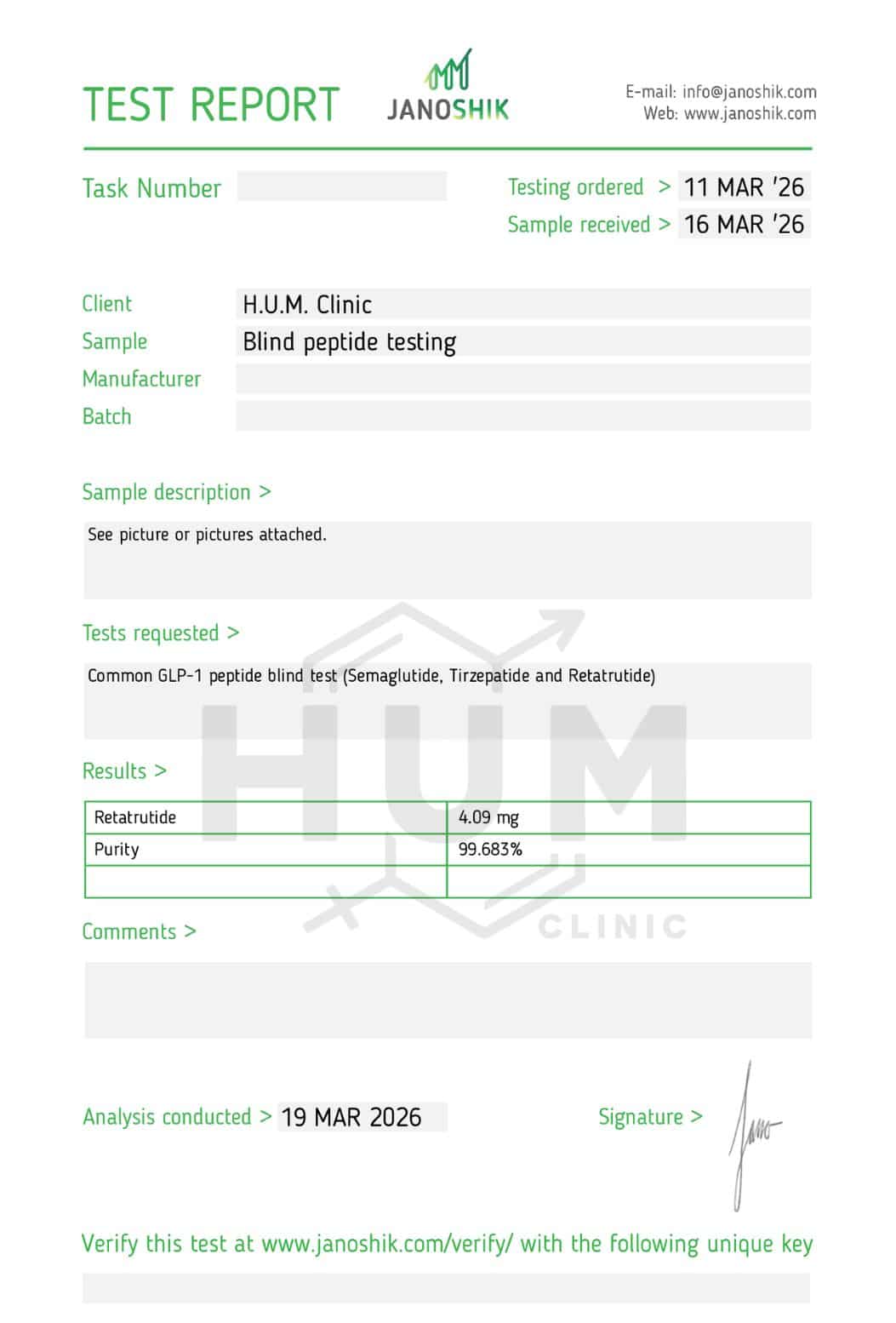
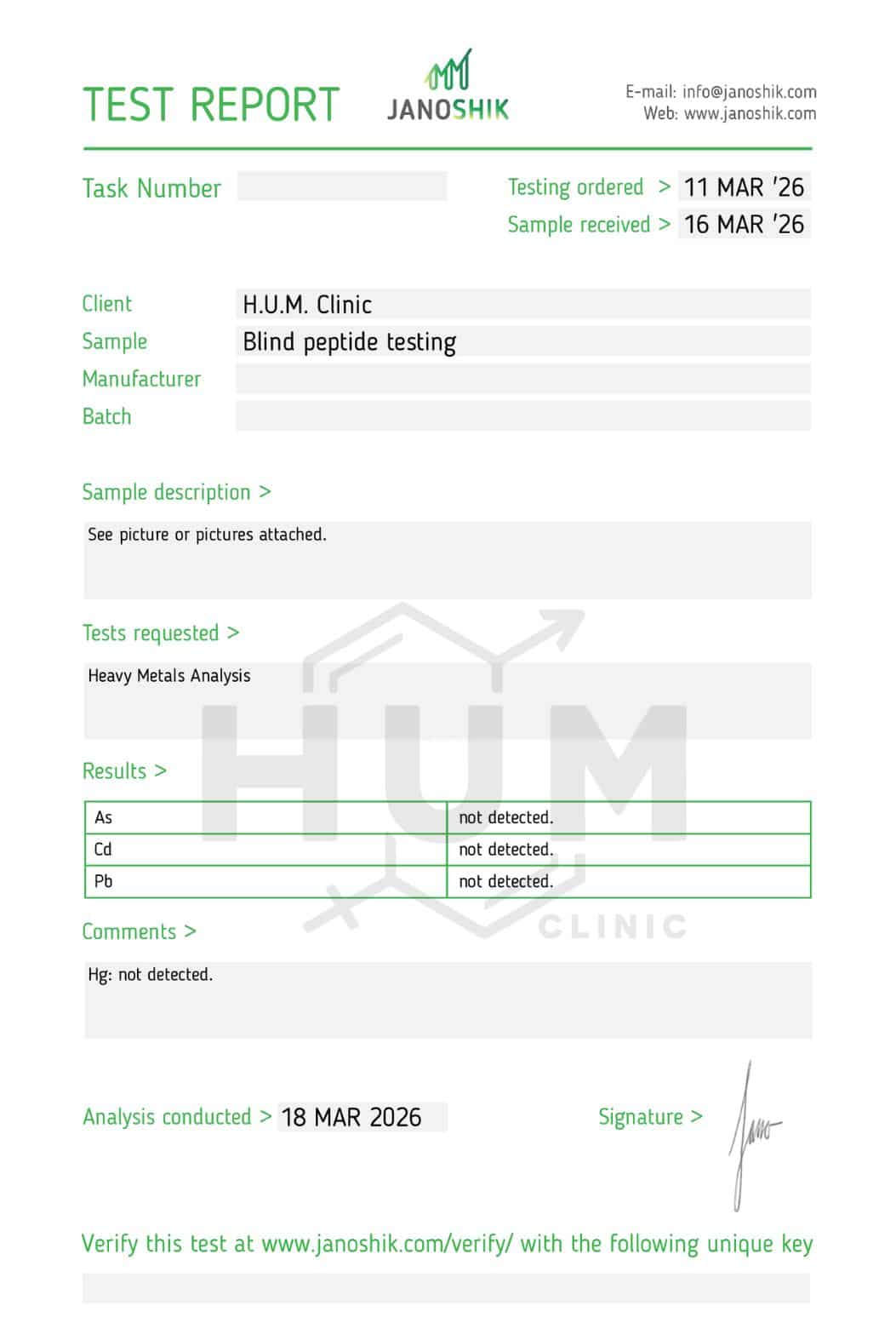
- Third-party laboratory testing
- HPLC purity >99.5%
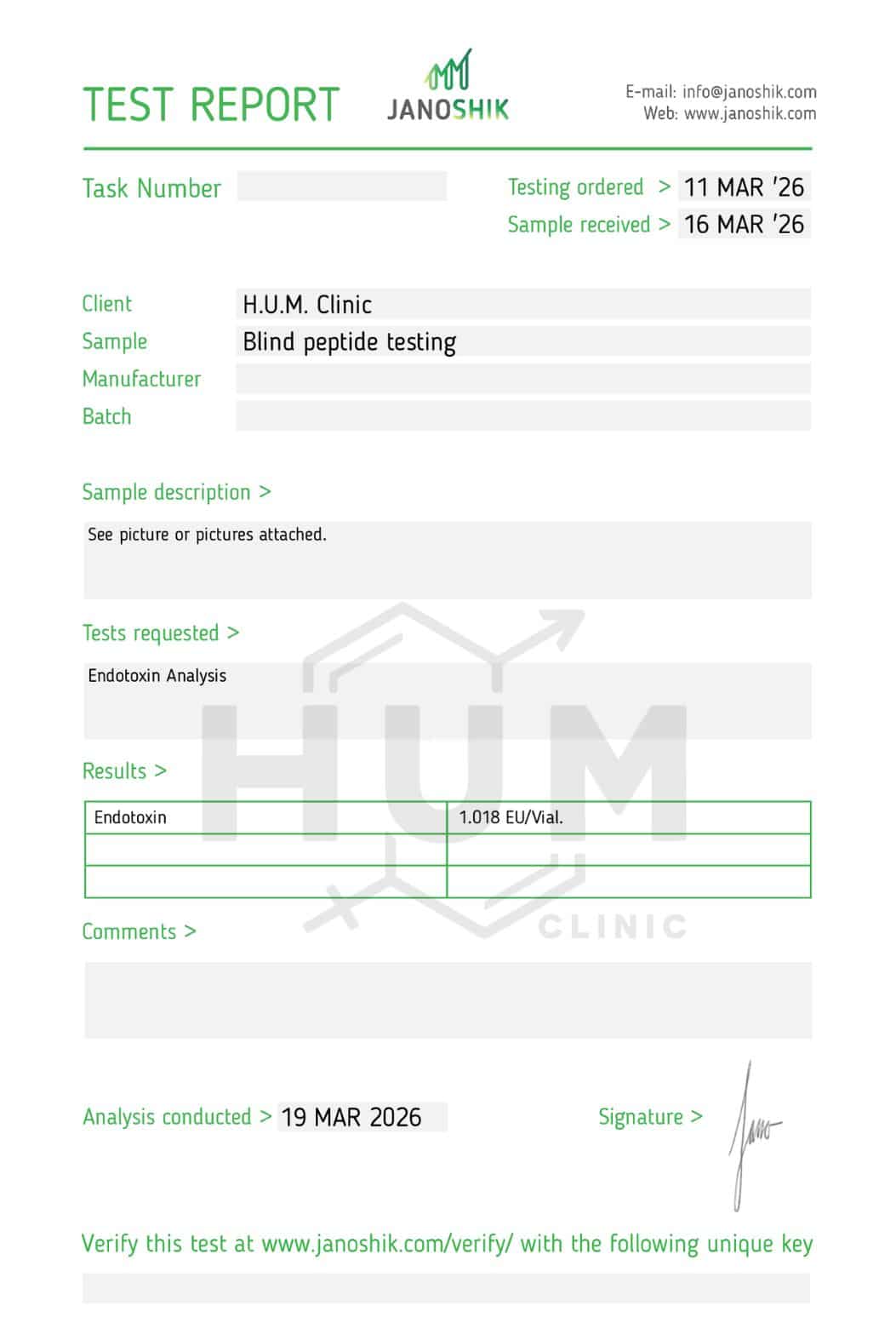
- Endotoxin tested
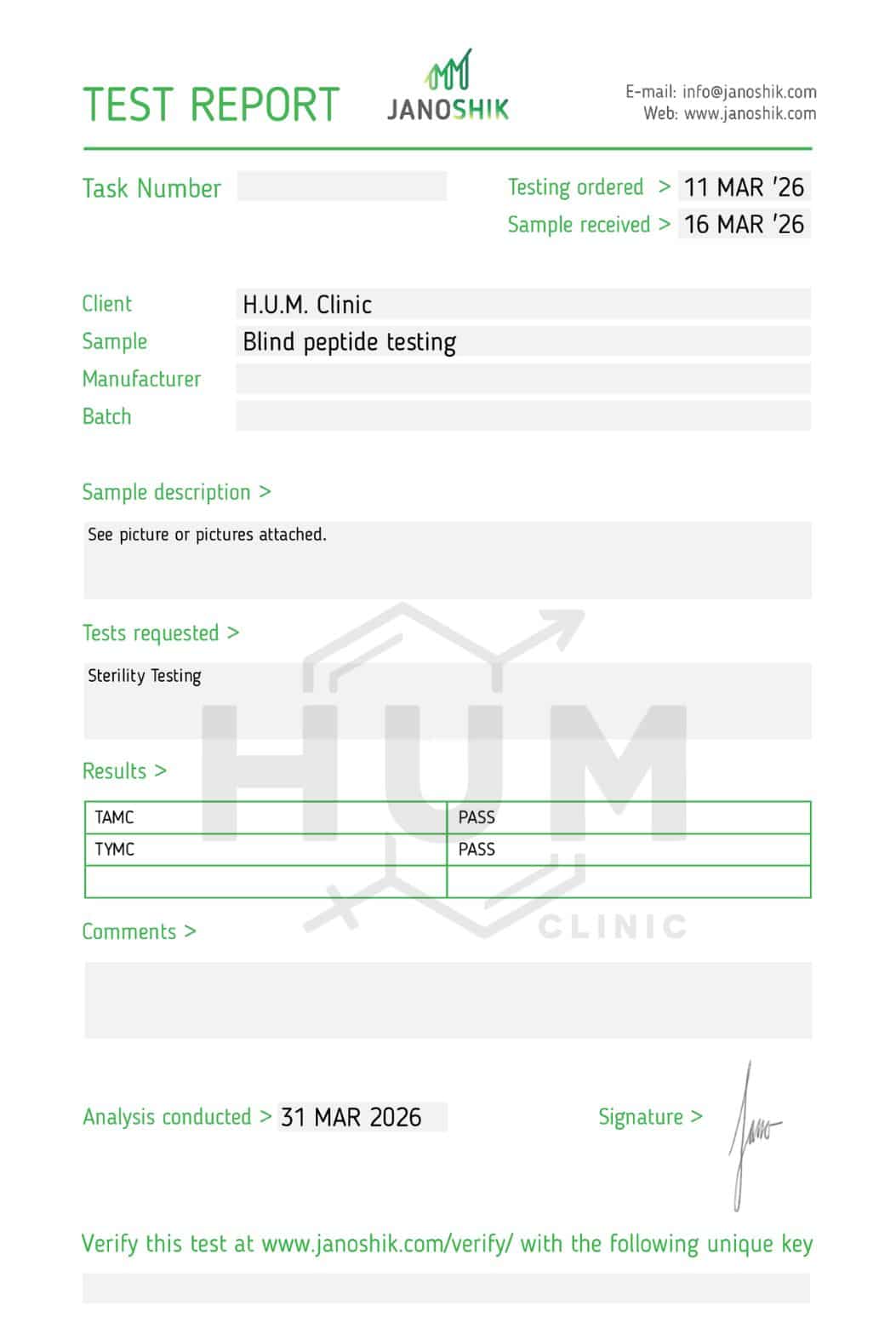
- Sterility tested (TAMC / TYMC)
- Heavy metal tested
Patients can review third-party lab results before treatment, ensuring full transparency.
Why Quality Matters in Injectable Peptides
Poor-quality injectable peptides may lead to:
- Endotoxin reactions
- Contamination risk
- Inconsistent dosing
- Reduced effectiveness
Medical-grade verification significantly reduces these risks.
Retatrutide Treatment Protocol
| Month | Weekly Dose |
|---|---|
| Month 1 | 1 mg |
| Month 2 | 2 mg |
| Month 3 | 4 mg |
| Month 4 | 8 mg |
Dosing must be individualized under physician supervision.
Monitoring Progress with Body Composition Analysis
At H.U.M. Clinic in Bangkok, retatrutide treatment is monitored using body composition analysis, allowing physicians to track:
- Fat loss
- Muscle preservation
- Metabolic progress
This provides a more accurate evaluation than body weight alone.
Physician-Supervised Treatment Program
Patients receive:
- Medical consultation
- Individualized dosing guidance
- Ongoing monitoring
- Physician support throughout treatment

Real Patient Results
Selected patients at H.U.M. Clinic have demonstrated:
- Reduction in body fat percentage
- Preservation of lean muscle mass
- Improved metabolic profile
(Before-and-after body composition data can be provided during consultation.)
Who May Consider Retatrutide?
Retatrutide may be considered in individuals such as:
- Obesity
- Metabolic syndrome
- Weight loss plateau
- Suboptimal response to semaglutide or tirzepatide
- High visceral fat levels
- Those aiming for fat loss while preserving lean muscle mass
Suitability should always be evaluated under physician supervision.
Who Should Not Use Retatrutide
Retatrutide may not be appropriate for individuals with certain medical conditions, including:
- Personal or family history of medullary thyroid carcinoma (MTC)
- Multiple endocrine neoplasia type 2 (MEN2)
- History of pancreatitis
- Uncontrolled or unstable medical conditions
- Endocrine disorders requiring specialist evaluation
All patients should undergo physician assessment before considering treatment.
Retatrutide Cost in Bangkok
The cost of retatrutide at our Bangkok clinic can vary depending on:
- Dosing requirements
- Treatment duration
- Level of medical supervision
Medical-grade retatrutide involves higher manufacturing standards and quality control, including third-party laboratory testing and verification. As a result, the expected cost is typically higher than for online research-grade products, often 2–3 times as much, depending on quality and source.
This approach is generally more suitable for individuals who:
- Prioritize product quality and safety
- Seek more consistent and reliable outcomes
- Prefer treatment under medical supervision
Consultation is recommended to determine an appropriate and individualized plan.
Schedule a Consultation
To learn more about where to find retatrutide in Bangkok and get a personalized weight loss treatment plan, contact H.U.M. Clinic online or via:
- Phone: 098 983 2949
- Line: @humclinic
- WhatsApp: https://wa.me/66989832949
Book an appointment today or contact us to get a service overview.
FAQs About Retatrutide
Q: What is retatrutide?
A: Retatrutide is a triple agonist peptide that targets GLP-1, GIP, and glucagon receptors to support metabolic function and weight regulation.
Q: Is retatrutide at H.U.M. Clinic in Bangkok safe?
A: When used under physician supervision with medical-grade quality control, the safety of retatrutide can be managed. It should not be used without proper medical guidance.
Q: How effective is retatrutide?
A: Early clinical studies suggest that retatrutide may have stronger metabolic and weight reduction effects compared to earlier GLP-1–based therapies, due to its triple receptor mechanism.
Q: How much weight loss can be expected from retatrutide?
A: Clinical trials have reported up to approximately 24% total body weight reduction in some groups over 48 weeks, depending on dosage and individual response.
Q: What are the side effects of retatrutide?
A: Reported side effects are generally similar to incretin-based therapies and may include:
– Nausea
– Vomiting
– Decreased appetite
– Gastrointestinal discomfort
Side effects vary between individuals and should be monitored under medical supervision.
Q: Is retatrutide approved?
A: Retatrutide is currently considered investigational and is not widely approved for general clinical use.
Q: How is retatrutide different from semaglutide?
A: Retatrutide targets three metabolic pathways (GLP-1, GIP, and glucagon), while semaglutide acts on GLP-1 alone.
Q: Can I buy retatrutide online?
A: Unregulated online products may not meet safety or quality standards. Medical supervision is strongly recommended.
Q: What should I look for in a Certificate of Analysis (COA)?
A: A reliable COA should include:
– Purity level (typically >99%)
– Endotoxin testing results
– Sterility testing (e.g. TAMC / TYMC)
– Heavy metal analysis
– Batch identification and verification
Reviewing COA helps ensure product quality and consistency before use.

Provides diverse medical services, specializing in male hormone treatment, sexual health, and general practice care. He is dedicated to delivering comprehensive care for international patients, addressing physical, emotional, and mental health needs.