

Table of contents
The Sunshine Prohormone: Why Vitamin D Is Essential for Total Health Optimization
Often called the “Sunshine Vitamin,” Vitamin D is far more than a nutrient — it’s a powerful prohormone vital to almost every system in your body.
Even in sunny Bangkok, deficiency is common due to indoor lifestyles and sunscreen use. Low Vitamin D can silently drain your energy, weaken immunity, and accelerate aging.
At H.U.M. Clinic Bangkok, we make Vitamin D optimization a cornerstone of our anti-aging and wellness programs. Our experienced doctors design personalized plans that include Vitamin D + K2 supplementation and Vitamin D injections in Bangkok for safe, evidence-based results.

What Is Vitamin D and How Does It Work?
Vitamin D behaves like a hormone. Once processed by your liver and kidneys, it becomes calcitriol, the active form that binds to receptors across nearly every cell in your body — regulating genes that control immunity, metabolism, and cellular repair.
Sunlight triggers production of Vitamin D3 in the skin, which is then converted into its active form. As Bangkok’s leading Hormone Clinic, we know maintaining the right Vitamin D balance is key for hormone stability, bone strength, and longevity.
The Core Benefits of Vitamin D — Beyond Bone Health
- Immune Defense: Strengthens immune response and reduces frequency of infections.
- Bone and Joint Health: Enhances calcium absorption and prevents osteoporosis.
- Mood & Cognitive Support: Low Vitamin D is linked to depression and brain fog.
- Muscle Performance: Improves strength and recovery, reducing fall risk.
- Heart and Vascular Health: Supports healthy blood pressure and circulation.
- Metabolic Balance: Improves insulin sensitivity and supports healthy body weight.
D2 vs. D3: Which Is Better?
- Vitamin D2 (Ergocalciferol): From plants and fortified foods.
- Vitamin D3 (Cholecalciferol): From sunlight and animal sources.
Clinical studies show Vitamin D3 is far more effective at raising and maintaining healthy blood levels, which is why it’s the preferred form used in all H.U.M. Clinic Bangkok supplementation and injection protocols.

Testing Your Vitamin D Level: The 25(OH)D Blood Test
Because everyone metabolizes Vitamin D differently, the only reliable way to know your status is through a 25-hydroxyvitamin D (25-OH D) test.
At H.U.M. Clinic, we include this in our Preventive Screening & Blood Work programs.
| Vitamin D Level | Classification |
| < 20 ng/mL | Deficient |
| 20–30 ng/mL | Insufficient |
| 30–100 ng/mL | Optimal |
Our doctors aim for 40–60 ng/mL, the ideal range for peak immune, metabolic, and bone health.
The Silent Risk: Low Vitamin D Symptoms
Even in tropical climates like Thailand, deficiency is widespread.
Common Signs:
- Persistent fatigue or low energy
- Bone, back, or joint pain
- Frequent colds or infections
- Muscle weakness
- Low mood or seasonal depression
Long-Term Risks: Autoimmune disease, heart disease, diabetes, and osteoporosis.
Vitamin D Supplement Forms: Oral, Sublingual & Injection Therapy
When sunlight and diet aren’t enough, supplementation becomes essential.
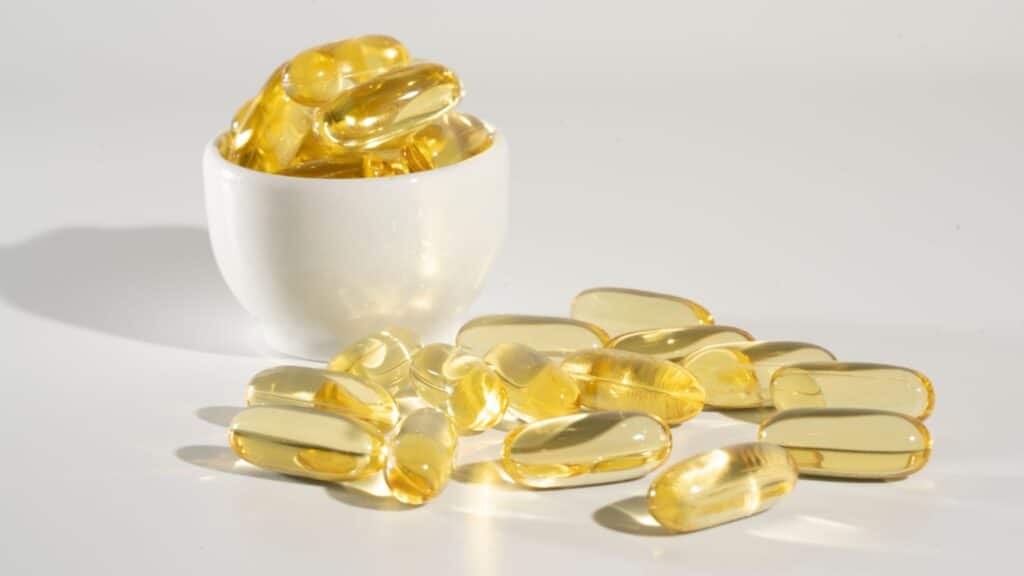
- Oral Tablets/Capsules — convenient daily or weekly dosing with healthy fat for absorption.
- Sublingual Drops — fast absorption under the tongue, ideal for those who dislike pills.
- High-Dose Injection (IM) — rapid correction for severe deficiency or malabsorption. Each injection delivers Vitamin D directly into the bloodstream for faster, more predictable results.
Vitamin D + K2: Why They Work Better Together
While Vitamin D3 boosts calcium absorption, Vitamin K2 ensures that calcium is deposited in bones and teeth — not arteries.
- Vitamin D3 → increases calcium absorption
- Vitamin K2 (MK-7) → activates osteocalcin & matrix Gla-protein to guide calcium to the right place
Without enough K2, long-term or high-dose Vitamin D can cause unwanted calcium buildup in soft tissues.
At H.U.M. Clinic Bangkok, we provide personalized Vitamin D and K2 treatment plans, with customized dosing of Vitamin D based on your blood test results and individual health goals.
Our doctors carefully tailor both the dosage and delivery method — whether oral, sublingual, or injection — to ensure safe, effective correction and optimal long-term balance for bone strength, hormonal health, and cardiovascular protection.
Do I Need K2 If I Get Vitamin D Injection?
Yes — even with injections, Vitamin K2 remains important.
Vitamin D injections quickly raise serum calcium and Vitamin D levels; K2 prevents that calcium from accumulating in blood vessels.
We usually recommend 100–200 mcg of K2 (MK-7) daily along with any Vitamin D injection in Bangkok to maintain a safe, balanced mineral profile.
Recommended Vitamin D Dosage: Oral & Injection Guidelines
Your ideal dosage depends on lab results, weight, and sun exposure.
Typical regimens at H.U.M. Clinic Bangkok:
Vitamin D Dosing Recommendations (Adults)
1. Oral Vitamin D3 (Cholecalciferol)
| Clinical Status | Typical Dosage | Duration | Reference |
| Mild deficiency (20–30 ng/mL) | 2,000–4,000 IU/day | 8–12 weeks | Endocrine Society 2011 |
| Moderate deficiency (10–20 ng/mL) | 5,000–7,000 IU/day | 8–12 weeks | Endocrine Society 2011 |
| Severe deficiency (<10 ng/mL) | 50,000 IU/week (≈7,000 IU/day) | 8–12 weeks | NIH / Holick et al. 2011 |
| Maintenance / Prevention | 1,000–2,000 IU/day (up to 4,000 IU/day for limited sun exposure) | Long-term | NIH ODS 2023 |
| Upper safe limit (UL) | 4,000 IU/day (general adults) – up to 10,000 IU/day under medical supervision | — | NIH ODS 2023 |
2. Injection (IM Vitamin D3)
| Clinical Indication | Typical Dose | Frequency | Reference |
| Severe deficiency (<10 ng/mL) | 300,000 IU IM single dose | Every 3–6 months | UK NHS / NICE CG23 |
| Maintenance (after correction) | 100,000 IU IM dose | Every 3 months | Royal Osteoporosis Society 2022 |
| Alternative regimen (Europe/Asia) | 600,000 IU IM annually (once a year) | 1x per year | Clinical trials, J Clin Endocrinol Metab 2019 |
All injections are performed under doctor supervision with post-treatment blood testing to ensure safety and optimal levels.
Monitoring
- Recheck 25(OH)D levels after 8–12 weeks post-therapy.
- Aim for 40–60 ng/mL (100–150 nmol/L) optimal range.
- Always pair high-dose Vitamin D with Vitamin K2 (100–200 mcg/day) for calcium regulation and vascular safety.

Vitamin D Injection Provider in Bangkok
As part of our advanced preventive and anti-aging care, H.U.M. Clinic Bangkok offers Vitamin D injection therapy administered by experienced physicians.
If your blood test reveals deficiency, a medically supervised injection can rapidly restore your levels, followed by oral or sublingual maintenance plus Vitamin K2 support for long-term balance.
Schedule your comprehensive health screening and Vitamin D assessment today at H.U.M. Clinic Bangkok to feel stronger, more energetic, and hormonally balanced.
Frequently Asked Questions (FAQ)
How often should I get a Vitamin D injection?
Typically every 3–6 months, depending on your baseline levels and lifestyle. Your doctor will customize the interval.
When should I re-check my Vitamin D level after injection?
A follow-up 25(OH)D test after 8–12 weeks confirms correction and guides future dosing.
Can I take Vitamin D every day?
Yes — daily oral Vitamin D3 (1,000–4,000 IU) is safe for maintenance when monitored by a doctor.
Do I need Vitamin K2 with injections?
Yes. We recommend pairing K2 (MK-7) with Vitamin D injections or supplements to ensure calcium goes to bones, not arteries.
Can too much Vitamin D be harmful?
Excessive doses may raise calcium too high. Always test before and after therapy to avoid toxicity.
What are signs of low Vitamin D?
Fatigue, body aches, frequent illness, low mood, or poor bone density — all reasons to test.
What should I do if I have low Vitamin D?
If your blood test shows low Vitamin D levels, don’t worry — it’s very common and easily correctable. The first step is to determine the severity of deficiency with a 25(OH)D test.
Your doctor at H.U.M. Clinic Bangkok will then create a personalized treatment plan, which may include:
Oral Vitamin D3 supplements (daily or weekly) for mild to moderate deficiency
High-dose Vitamin D injection for faster correction or if you have absorption issues
Vitamin K2 supplementation to support proper calcium metabolism and protect cardiovascular health
Lifestyle guidance — safe sun exposure, balanced diet, and follow-up testing every 8–12 weeks
Contact H.U.M. Clinic Bangkok
📍 Location: LG floor, Exchange tower, Sukhumvit Road. Khong Toei, Bangkok
📞 Phone / LINE: LINE tel:+66989832949
🌐 Website: www.hum-clinic.com
🕒 Open: 9.30 AM – 1.00 PM, 2.00 PM – 6.30 PM daily
💬 Book Now: [Book Appointment Online]

Wichakorn Jitpraphun, M.D. (Dr. Kamin) is the Co-founder and Medical Director of H.U.M. Clinic, Bangkok. A physician licensed by the Medical Council of Thailand (License No. 51754), he has over 10 years of clinical experience, practicing since 2016. Dr. Kamin holds Certificate Diplomas in Sexual Medicine and Sexology from Thammasat University and Andrology certification from the Society of Men’s Health Singapore. His clinical practice focuses on testosterone replacement therapy (TRT), Men’s health, sexual medicine, HIV prevention and treatment, peptide therapy, and evidence-based medical weight management.