
Key Takeaways
- Bacterial vaginosis is a shift in vaginal bacteria, not an infection caught from someone. It’s the most common vaginal condition in women of reproductive age.
- Typical symptoms include thin grayish discharge and a fishy odor, but many cases are asymptomatic and found during routine screening.
- BV raises the risk of acquiring chlamydia, gonorrhea, HIV, and other STIs, which makes screening important alongside treatment.
- Patients can access confidential STD and STI testing in Bangkok at H.U.M. Clinic.

Bacterial vaginosis is rarely referred to by its proper name. Most people describe it as a smell issue or a recurring infection that keeps coming back after antibiotics, and many try to treat it with over-the-counter yeast products that don’t work on this condition. The pattern of misdiagnosis is one reason it recurs so often.
According to the World Health Organization, BV is the most common vaginal condition in women of reproductive age and significantly increases the risk of acquiring sexually transmitted infections including chlamydia, gonorrhea, and HIV. Here’s what to know about the symptoms, what triggers it, how it’s treated, and why STI screening matters alongside a BV diagnosis.
What Causes Bacterial Vaginosis and Why It Happens
BV results from a shift in vaginal flora. In a healthy vagina, protective lactobacilli dominate and keep the environment slightly acidic. In BV, those lactobacilli decrease and anaerobic bacteria, including Gardnerella species, overgrow. The result is a less acidic vaginal environment and the symptoms that follow.
The exact trigger isn’t fully understood. What’s clear from research is that risk rises with new or multiple sexual partners, unprotected sex, and disruption of the vaginal environment through douching or perfumed products.
One important point: BV isn’t caused by poor hygiene. In fact, overwashing or using antiseptic products in the vaginal area can worsen the imbalance by killing off protective lactobacilli. The vagina is self-cleaning, and disturbing that balance is one of the strongest modifiable risk factors.
BV frequently recurs even after successful treatment. Studies show up to half of patients experience a return of symptoms within 12 months of antibiotic treatment, which makes understanding the underlying causes as important as clearing the current episode.
Recognizing Bacterial Vaginosis Symptoms
Many people with BV have no symptoms at all. The condition is often found incidentally during routine gynecological exams or STI screening, not because the patient came in complaining of a problem.
When symptoms do appear, the most recognizable is a change in vaginal discharge. Typical bacterial vaginosis discharge is thin and grayish-white, more voluminous than usual, and carries a distinctive fishy odor. The smell can intensify after sex or during menstruation, when the vaginal pH shifts further.
Other possible symptoms include mild itching, irritation, or a burning sensation during urination. However, BV usually doesn’t cause severe pain, intense itching, or thick cottage-cheese-like discharge. Those symptoms suggest a different condition, most often a yeast infection, which requires a different treatment.
Because BV, yeast infections, and STIs can produce overlapping symptoms, clinical evaluation and testing is important before self-treating. A quick clinic visit for a swab and pH check can distinguish between them and rule out any co-existing infections.
How to Treat Bacterial Vaginosis with Medication
First-line bacterial vaginosis medication is prescription antibiotics. The CDC recommends either metronidazole or clindamycin, delivered orally or as a vaginal gel or cream. Common regimens include:
- Metronidazole oral: 500 mg twice daily for 7 days.
- Metronidazole gel: 0.75% intravaginal once daily for 5 days.
- Clindamycin cream: 2% intravaginal at bedtime for 7 days.
Completing the full course is critical. Stopping antibiotics early when symptoms improve leaves residual overgrowth behind, and recurrence becomes more likely. Alcohol should typically be avoided during and shortly after metronidazole treatment because of the risk of a disulfiram-like reaction.
For recurrent BV, longer or suppressive antibiotic regimens are sometimes used. Options include extended courses of metronidazole gel or twice-weekly suppressive dosing. Lifestyle adjustments to reduce trigger factors are often part of the plan.
Over-the-counter yeast infection treatments don’t treat BV. Using them repeatedly can delay correct diagnosis and let the underlying condition worsen. If symptoms persist despite OTC treatment, a clinical evaluation is the next step.
BV, STI Risk, and When to Get Tested
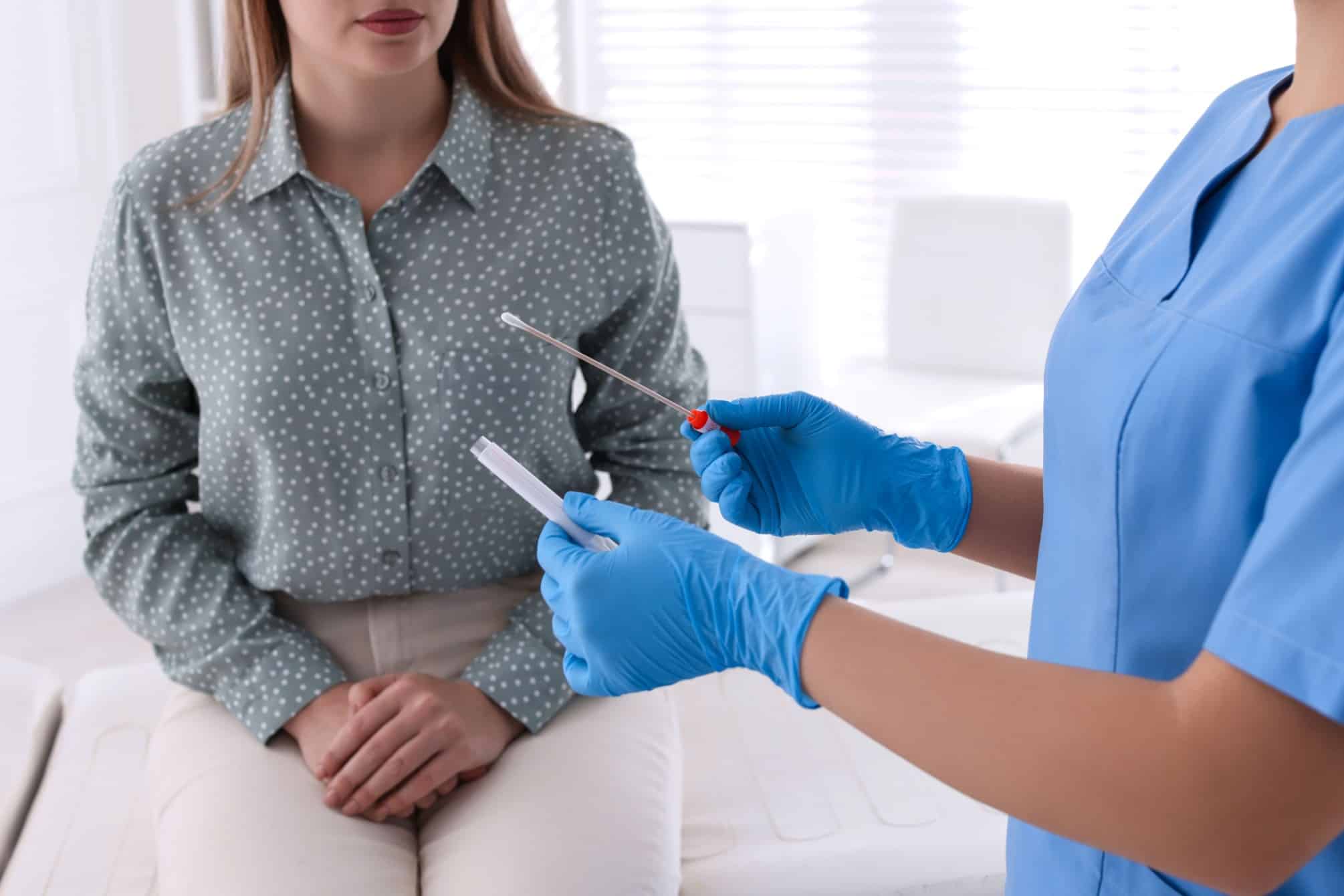
BV disrupts the vaginal protective barrier. That disruption increases susceptibility to chlamydia, gonorrhea, trichomoniasis, and HIV acquisition. Someone with BV who is exposed to an STI is more likely to contract it than someone with a healthy vaginal flora.
WHO and CDC guidance both recommend STI screening alongside BV evaluation, particularly for patients with new partners or inconsistent condom use. A BV diagnosis is a good moment to check for infections that could be present without symptoms.
Testing should reflect exposure sites where clinically appropriate. A single urine PCR can miss infections at other anatomical locations, so a doctor will often recommend a broader panel that includes throat, rectal, and vaginal sampling depending on exposure history.
Patients diagnosed with BV who haven’t recently been screened for STIs should consider a comprehensive panel. Chlamydia and gonorrhea can be asymptomatic, and catching them early prevents complications like pelvic inflammatory disease and infertility.
How to Prevent Bacterial Vaginosis Day to Day
Prevention focuses on protecting the vaginal environment and reducing exposure to known risk factors. The most important step is one many people don’t expect:
- Avoid douching entirely: The vagina is self-cleaning, and douching is one of the strongest modifiable risk factors for BV.
- Skip perfumed products: Use plain water or mild unscented soap externally only. Avoid perfumed washes, deodorants, and antiseptics in or around the vagina.
- Practice safer sex: Condoms, dental dams, and cleaning shared sex toys between users can reduce both BV recurrence and STI transmission.
- Choose breathable fabrics: Cotton underwear, prompt changing out of wet workout clothes, and avoiding tight synthetic fabrics support a healthy vaginal environment.
- Manage recurrence early: If symptoms return, see a doctor rather than repeating OTC treatments. Longer or suppressive antibiotic courses may be appropriate.
Get BV Evaluation and STI Screening at H.U.M. Clinic
Bacterial vaginosis is driven by a disruption in vaginal flora, not by poor hygiene, and it raises the risk of acquiring sexually transmitted infections. Antibiotic treatment is effective, but recurrence is common, which makes prevention strategies and same-visit STI screening an important part of ongoing sexual health care. Waiting out symptoms or repeating over-the-counter yeast products rarely resolves the underlying imbalance.
At H.U.M. Clinic, our English-speaking doctors offer comprehensive STI panel testing using PCR and NAAT methods aligned with US CDC guidance, covering chlamydia, gonorrhea, syphilis, HIV, hepatitis, mycoplasma, and other infections that can co-exist with BV. Panels are chosen based on exposure history and symptoms, and anonymous testing options are available for patients who prefer additional privacy. Same-day and next-day result options depend on the test type, and every consultation with us is confidential and non-judgmental.
Book your confidential appointment for STD and STI testing in Bangkok patients trust at H.U.M. Clinic. For more details, contact us via LINE, WhatsApp, phone at 098 983 2949, or email at [email protected]. Our clinic is located near BTS Asok and MRT Sukhumvit for convenient access from central Bangkok.
References
- Bacterial vaginosis. Retrieved August 7, 2026, from https://www.mayoclinic.org/diseases-conditions/bacterial-vaginosis/symptoms-causes/syc-20352279
- Bacterial vaginosis. Retrieved August 7, 2026, from https://www.who.int/news-room/fact-sheets/detail/bacterial-vaginosis
- About Bacterial Vaginosis. Retrieved August 7, 2026, from https://www.cdc.gov/bacterial-vaginosis/about/index.html
- What causes bacterial vaginosis. Retrieved August 7, 2026, from https://www.nichd.nih.gov/health/topics/bacterialvag/conditioninfo/causes
- Bacterial Vaginosis (StatPearls). Retrieved August 7, 2026, from https://www.ncbi.nlm.nih.gov/books/NBK459216/
- Bacterial Vaginosis Treatment Guidelines. Retrieved August 7, 2026, from https://www.cdc.gov/std/treatment-guidelines/bv.htm
- Bacterial vaginosis. Retrieved August 7, 2026, from https://www.nhs.uk/conditions/bacterial-vaginosis/
- Bacterial Vaginosis. Retrieved August 7, 2026, from https://www.merckmanuals.com/home/women-s-health-issues/vaginitis-cervicitis-and-pelvic-inflammatory-disease/bacterial-vaginosis-bv
- 6 contributors to bacterial vaginosis. Retrieved August 7, 2026, from https://www.mayoclinichealthsystem.org/hometown-health/speaking-of-health/6-contributors-to-bacterial-vaginosis
Frequently Asked Questions About Bacterial Vaginosis
Q: Is bacterial vaginosis a sexually transmitted infection?
A: BV isn’t classified as a classic STI, but it’s strongly linked to sexual activity. It can occur in people who aren’t sexually active, but risk rises with new or multiple sexual partners and unprotected sex. Having BV also increases the risk of acquiring true STIs like chlamydia, gonorrhea, and HIV.
Q: Can bacterial vaginosis go away on its own?
A: Some mild cases resolve without treatment, but many don’t, and untreated BV raises the risk of complications and STI acquisition. If symptoms persist for more than a few days or recur, a clinical evaluation and prescription antibiotics are the safer choice. Self-treating with OTC yeast products doesn’t work for BV.
Q: What does bacterial vaginosis discharge look like?
A: Typical BV discharge is thin, grayish-white, and more voluminous than usual, with a fishy odor that can intensify after sex or during menstruation. It usually doesn’t cause severe itching or thick, clumpy discharge. If either is present, a yeast infection or another condition may be the cause.
Q: Should I get tested for STIs if I have BV?
A: Yes, testing is worth considering. BV increases the risk of acquiring STIs, and many STIs can be present without symptoms. A comprehensive STI panel at the time of BV evaluation gives you clarity on your overall sexual health status and lets any co-existing infections be treated early.

Wichakorn Jitpraphun, M.D. (Dr. Kamin) is the Co-founder and Medical Director of H.U.M. Clinic, Bangkok. A physician licensed by the Medical Council of Thailand (License No. 51754), he has over 10 years of clinical experience, practicing since 2016. Dr. Kamin holds Certificate Diplomas in Sexual Medicine and Sexology from Thammasat University and Andrology certification from the Society of Men’s Health Singapore. His clinical practice focuses on testosterone replacement therapy (TRT), Men’s health, sexual medicine, HIV prevention and treatment, peptide therapy, and evidence-based medical weight management.