
Table of contents
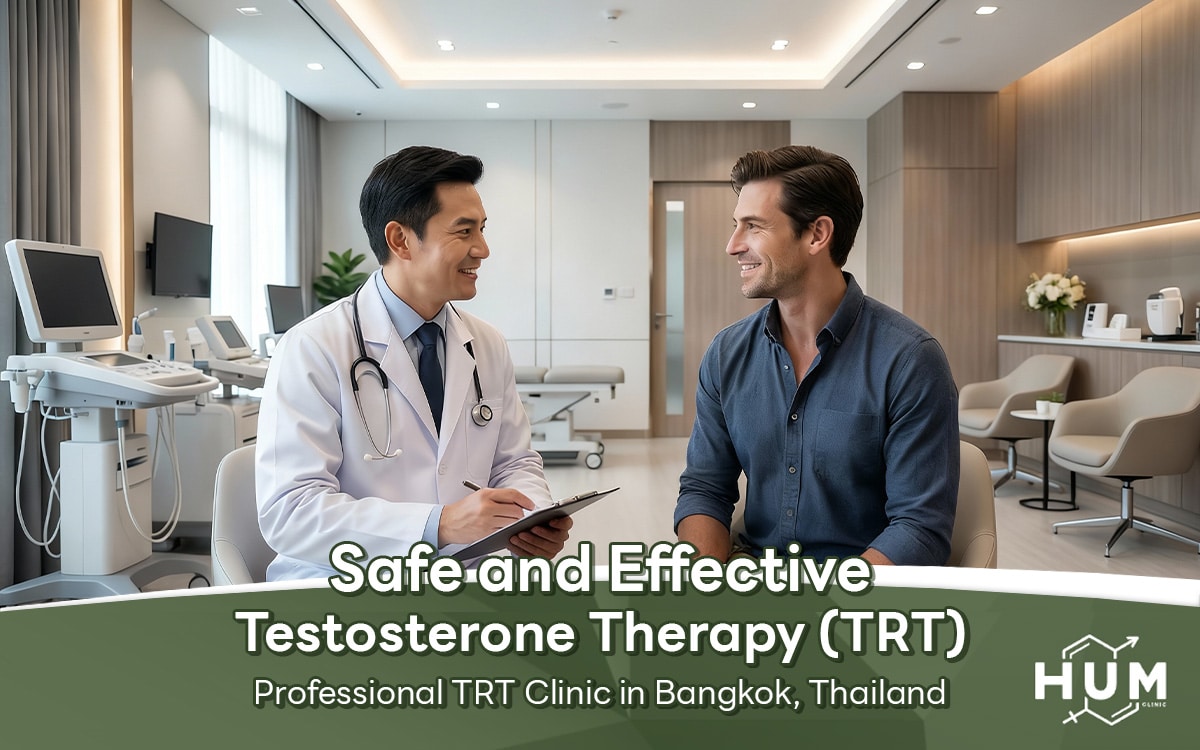
At H.U.M. Clinic in Bangkok, we specialize in testosterone replacement therapy (TRT) designed to safely restore your hormone balance, performance, and vitality. Our treatment programs are led by doctors experienced in men’s hormone optimization. We follow an integrated, evidence-based approach aligned with international medical guidelines to safely restore your energy, strength, and confidence at an affordable cost.
Key Takeaways
- TRT restores hormone balance, energy, and vitality in men with medically confirmed testosterone deficiency.
- Proper evaluation requires clinical symptom assessment (e.g., ADAM questionnaire) and comprehensive laboratory testing, including Total Testosterone, Free Testosterone, and SHBG.
- Patients can choose between testosterone injections (often more cost-effective) and gels (convenient, needle-free, stable absorption).
- TRT is safe when managed by experienced physicians through regular monitoring of hormone levels, red blood cell counts, and prostate health.
- Treatment plans at H.U.M. Clinic are tailored to your specific health profile, goals, and lifestyle to ensure the safest, most effective outcomes.
Self-Assessment for Low Testosterone – The ADAM Questionnaire
Many men live with undiagnosed low testosterone for years because symptoms appear gradually. The Androgen Deficiency in Aging Males (ADAM) questionnaire is a quick way to check whether your symptoms may be related to a hormonal imbalance. Answer “Yes” or “No” to these common signs:
- Has your sex drive decreased?
- Do you often feel tired or low in energy?
- Have you noticed a loss of strength or endurance?
- Are you more irritable or moody lately?
- Have you experienced difficulty concentrating or remembering things?
- Have you gained belly fat or lost muscle definition?
- Do you have fewer or weaker erections, including morning erections?
- Do you feel a drop in motivation or enjoyment of life?
If you answered “Yes” to question 1 or 7, or to three or more in total, you may be experiencing symptoms of testosterone deficiency. A hormone evaluation and TRT diagnosis at H.U.M. Clinic can help determine whether TRT is right for you.

How We Diagnose Low Testosterone – Lab Evaluation at H.U.M. Clinic
Our clinic uses a comprehensive hormone panel to assess your full hormonal picture before starting any treatment.
Total Testosterone
Measures all testosterone circulating in your blood, both active and inactive forms. Normal range: 300-1,000 ng/dL. Two low results (taken in the morning) plus symptoms suggest testosterone deficiency.
Free Testosterone
This is the active form your body can use for energy, libido, and muscle function. Even if the total testosterone is within range, low free testosterone can still cause symptoms.
SHBG (Sex Hormone-Binding Globulin)
SHBG is a protein that binds testosterone and controls how much is available for use. When SHBG is high, which is common with aging, liver issues, or certain medications, free testosterone may drop, even if total levels look “normal.”
Additional Hormone Tests for TRT Diagnosis
To get an accurate TRT diagnosis, your doctor may also check LH, FSH, estradiol (E2), prolactin, DHEA-S, thyroid function, growth hormone, and micronutrients to identify the root cause before starting therapy.
When Testosterone Appears Normal but You Still Have Symptoms
Some men have all the signs of low testosterone even when their total testosterone is within range. This happens when too much testosterone is bound to SHBG and not available for the body to use.
- Evaluate free testosterone: Total testosterone can appear normal while active (free) levels remain low.
- Check SHBG levels: High SHBG can “lock away” testosterone, lowering its biological effect.
- Rule out other causes: Fatigue and mood changes may also stem from thyroid imbalance, sleep disorders, depression, or nutritional deficiencies, which we screen for at H.U.M. Clinic.

Exploring TRT: Which Option Is Right For You?
In Thailand, the most common forms of TRT currently offered are injections and gels. While patches are used in some countries, they are not yet widely available in Bangkok.
How Do Testosterone Injections Work and What Are the Benefits?
Testosterone injections are among the most popular choices because they deliver quick, reliable results. Testosterone can be injected either directly into the muscle (intramuscular, usually the thigh or glute) or into the subcutaneous fat layer (just under the skin, often in the abdomen or thigh). Both techniques allow steady absorption into the bloodstream, with dosage and frequency tailored to your needs.
- Fast and noticeable improvements in energy, mood, and libido
- Helps rebuild muscle mass and bone density
- Typically more cost-effective than other TRT methods
Things to consider: Testosterone levels may fluctuate between injections, which can affect mood or energy. If this happens, dosage or frequency can be adjusted, but always under the guidance of an experienced medical professional who monitors your hormone levels and overall health.
Can Testosterone Gels Be a Better Option for You?
For men who prefer a needle-free approach, testosterone gel is one of the most widely used alternatives to injections in Thailand. It’s applied daily to clean, dry skin, typically the shoulders, upper arms, or abdomen, and absorbed gradually into the bloodstream, helping maintain more stable levels throughout the day.
- Pros: Easy to use and pain-free (no needles), provides a more consistent release than injections, easy to self-administer at home, and suitable for men who experience large fluctuations with injections.
- Cons: Requires strict daily application at the same time each day, skin-to-skin transfer is possible (avoid close contact with partners or children until the gel dries), and may cause mild skin irritation in some users.
Who it’s best for: Men who prefer consistent hormone levels, dislike needles, travel frequently and need a discreet option, or are starting TRT for the first time, since gels allow doctors to adjust dosages more easily.
Can I Take TRT? What Are the Indications?
You may be a candidate for safe testosterone therapy in Bangkok if your lab results and clinical symptoms confirm testosterone deficiency.
- Total testosterone < 300-350 ng/dL on two separate morning tests, or
- Low free testosterone with elevated SHBG and persistent symptoms
Common clinical indicators for TRT diagnosis include reduced libido or erectile performance, chronic fatigue or loss of motivation, loss of muscle strength or mass, mood instability or depressive feelings, increased abdominal fat, and declining bone density or joint pain. TRT can help correct these issues safely when managed by an experienced physician.
Is Testosterone Therapy Safe for Older Adults?
Safe testosterone therapy at our Bangkok clinic can be offered to older adults, but it requires close monitoring by specialists. Risks may include:
- Prostate Health: TRT can enlarge the prostate or mask early signs of prostate cancer.
- Cardiovascular Concerns: Men with existing heart conditions need a thorough evaluation before starting therapy.
- Blood Health: TRT can increase red blood cell production, which may raise the risk of blood clots if not monitored.
With regular checkups and blood tests, TRT can be safe and effective for many men over 60.
Conditions Which Do Not Recommend TRT
Before starting TRT, H.U.M. Clinic conducts a comprehensive medical and laboratory screening to determine whether TRT is right for you.
Absolute Contraindications
- Active or suspected prostate or breast cancer
- High red blood cell count (hematocrit >54%)
- Severe untreated sleep apnea
- Severe heart failure
- Known allergy to testosterone formulations
Relative Contraindications (Require Specialist Monitoring)
- Elevated PSA or enlarged prostate
- Hormone-related tumor/cancer
- Fertility concerns (TRT can suppress sperm production)
- History of cardiovascular disease or clotting disorders
- Poorly controlled diabetes or obesity
Possible Side Effects of TRT and How They’re Managed
Like any medical treatment, testosterone therapy may cause side effects, most of which are manageable with proper monitoring.
- Acne or oily skin
- Mood changes, irritability, or aggression
- Increased red blood cell count (polycythemia)
- Mild swelling in ankles or feet
- Possible impact on prostate health
- Sleep apnea symptoms may worsen in individuals who already have this condition
- Gynecomastia (breast enlargement in men) caused by testosterone converting into estrogen
- Infertility – Testosterone injections can suppress natural sperm production, reducing sperm count
- Testicular shrinkage – the testes may become smaller as the body relies less on its own production
- Changes in cholesterol levels, such as reduced HDL (“good” cholesterol)
- Male pattern hair loss – acceleration of thinning or baldness in genetically predisposed men
Management Tips
- Regular blood tests to monitor hormone and red blood cell levels
- Adjusting the dosage or injection schedule if levels are too high
- Switching to gels if injection-related side effects persist
- Adjusting the route and frequency under medical supervision to reduce hormone fluctuations

Medical Monitoring During Testosterone Therapy
To maintain safety and effectiveness, all TRT patients are followed closely through a structured monitoring plan:
- Testosterone levels: Checked at baseline, 4-6 weeks after initiation, and every 3-6 months thereafter
- Hematocrit and hemoglobin: Ensure red blood cell counts remain in a safe range
- Prostate screening (PSA): Baseline and regular follow-up to track prostate health
- Liver, kidney, and lipid profile: Assess metabolic and cardiovascular safety
- Symptom review: Monitor progress, energy, libido, and side effects at each visit
Does Testosterone Therapy Increase Cancer Risk?
- Large-scale reviews (European Urology, JAMA) found no link between TRT and prostate cancer.
- TRT may cause mild prostate tissue growth (like normal aging), but this is not cancer.
- We monitor PSA and prostate health throughout treatment to ensure continued safety.
- Most prostate cancers occur in older men with low, not high, testosterone levels.
- Men with active prostate or breast cancer should not undergo TRT until cleared by their specialist.
How to Maintain and Optimize Testosterone Levels During TRT
- Nutrition: Prioritize lean proteins, healthy fats, zinc, and vitamin D.
- Exercise: Resistance and strength training enhance testosterone utilization.
- Sleep: 7-8 hours per night supports hormone recovery.
- Stress reduction: High cortisol suppresses testosterone production.
- Supplements: Omega-3, CoQ10, and antioxidants may support metabolic health.
So, Is TRT Right for You?
Testosterone Replacement Therapy is a proven way to restore hormone balance and improve quality of life for men with low testosterone. However, age, health conditions, and lifestyle all play a role in whether TRT is the best option for you, and whether to get testosterone injections vs. gel in Bangkok.
If you’re considering TRT, the next step is to complete the ADAM questionnaire and book a consultation with a qualified clinic such as H.U.M. Clinic. A specialist can check your hormone levels, discuss your goals, conduct a TRT diagnosis, and recommend the most effective treatment tailored specifically to you.
Non-TRT Alternatives, and TRT Program Pricing
Alternatives to TRT for Men Who Want to Preserve Fertility
TRT suppresses the body’s own testosterone and sperm production, so men who want to preserve fertility, or who have only mild or early hormone imbalance, may be better candidates for one of the following instead of TRT:
- Clomiphene citrate: A SERM that stimulates the brain’s own LH/FSH signaling to increase natural testosterone and sperm production.
- Enclomiphene: A more targeted isomer of clomiphene with fewer estrogenic side effects.
- HCG monotherapy: Mimics LH to stimulate the testes directly, commonly used by men who want to maintain fertility.
- Kisspeptin: A newer peptide option that stimulates the hypothalamic-pituitary axis, sometimes used for secondary hypogonadism.
These options are generally suited to men who prefer to stimulate their own natural production or are not ready to commit to lifelong TRT. A consultation is required to determine which approach fits your labs and goals.
TRT Program Pricing at H.U.M. Clinic
Program and medication costs vary by protocol. Examples of current pricing:
- Bodybuilding-dose TRT program
- 3-month program plus 1-month PCT (Post-Cycle Therapy) – 19,500 THB
- 6-month program plus 1-month PCT (Post-Cycle Therapy) – 36,000 THB
- Testosterone Enanthate – Approximately 7,200 THB per 3-month supply
- Testosterone Undecanoate (Nebido, long-acting injection) – Approximately 9,950 THB per injection
- Doctor consultation – 800 THB per 30-minute session or 1,500 THB for a 60-minute session
- Laboratory testing package – Starts from 6,500 THB
Prices are indicative and subject to change based on dose, brand, and individual protocol. Confirm current pricing directly with the clinic.
Book your private TRT consultation at H.U.M. Clinic and discover safe, evidence-based testosterone replacement therapy in Bangkok tailored to your body and goals.
References
- Mayo Clinic. Testosterone therapy: Potential benefits and risks as you age.
- NHS. Testosterone replacement therapy (TRT).
- Harvard Health Publishing. Testosterone therapy: Is it safe?
- Bhasin S, et al. (2018). Testosterone Therapy in Men with Hypogonadism: An Endocrine Society Clinical Practice Guideline. The Journal of Clinical Endocrinology & Metabolism, 103(5), 1715-1744.
- American Urological Association (AUA). Evaluation and Management of Testosterone Deficiency: AUA Guideline.

Wichakorn Jitpraphun, M.D. (Dr. Kamin) is the Co-founder and Medical Director of H.U.M. Clinic, Bangkok. A physician licensed by the Medical Council of Thailand (License No. 51754), he has over 10 years of clinical experience, practicing since 2016. Dr. Kamin holds Certificate Diplomas in Sexual Medicine and Sexology from Thammasat University and Andrology certification from the Society of Men’s Health Singapore. His clinical practice focuses on testosterone replacement therapy (TRT), Men’s health, sexual medicine, HIV prevention and treatment, peptide therapy, and evidence-based medical weight management.